


A website can look professional yet struggle to rank due to technical issues, weak content, poor keywords, slow speed, or weak backlinks. SEO Website Analysis identifies these problems, evaluates search performance, user experience, and competitors, and finds growth opportunities.
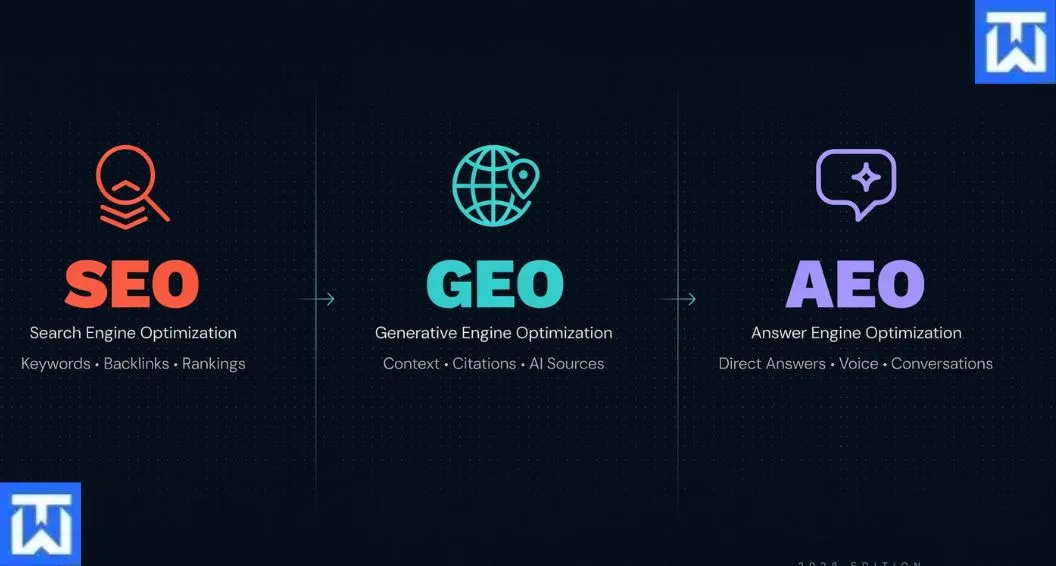
In 2026, modern SEO also includes AI SEO, AEO, and GEO SEO, helping websites improve visibility across traditional and AI-powered search.
What Is SEO Website Analysis?
SEO Website Analysis is the process of reviewing a website’s technical health, content, keywords, backlinks, user experience, and search visibility.
The purpose is not simply to find errors. A useful audit should answer three questions:
- What is preventing better rankings?
- What opportunities are competitors using?
- Which problems should be fixed first?
A complete analysis normally covers technical SEO, on-page SEO, keyword research, search intent, content quality, internal links, backlinks, mobile usability, page speed, Core Web Vitals, structured data, local SEO, AI SEO, AEO, and GEO SEO.
The final result should be a prioritized action plan, not just a long list of errors
Why Is SEO Website Analysis Important?
SEO depends on several elements working together.
You may have excellent content but poor technical SEO. Your website may be fast but target the wrong keywords. You may have strong backlinks but weak content that does not satisfy search intent.
Any of these weaknesses can reduce organic performance.
For example, if important pages are not indexed, publishing more articles will not solve the core problem. Likewise, increasing keyword density will not fix content that answers the wrong question.
A good audit helps you focus on high-impact SEO improvements first.
How to Perform an SEO Website Analysis
1. Check Technical SEO
Technical SEO creates the foundation for search visibility.
Search engines need to crawl, understand, and index your important pages correctly.
Check:
- Crawlability
- Indexing
- Robots.txt
- XML sitemap
- HTTPS
- Canonical tags
- Redirects
- 404 errors
- Duplicate pages
- Broken links
- URL structure
- Mobile usability
Use Google Search Console
Google Search Console should be one of the first tools you check.
It can show indexed pages, search queries, impressions, clicks, and indexing problems. Pages receiving impressions but few clicks can also reveal opportunities for better titles, descriptions, or search-intent alignment.
2. Analyze Page Speed and Core Web Vitals
Website performance affects user experience and can influence how effectively visitors interact with your site.
During an audit, review:
- LCP
- INP
- CLS
- Server response time
- Image sizes
- JavaScript
- CSS
- Browser caching
- Third-party scripts
Large images and unnecessary plugins are common performance problems, especially on WordPress websites.
Do not chase a perfect speed score simply for the number. The real objective is a website that loads quickly, remains stable, and responds smoothly for users.
3. Perform Keyword Research
Keywords connect your content with real searches.
However, modern SEO is not about repeating one phrase throughout an article. Instead, examine:
- Search intent
- Search volume
- Keyword difficulty
- Long-tail keywords
- Related searches
- Semantic keywords
- Informational intent
- Commercial intent
- Transactional intent
For example, “SEO website analysis tool” suggests that the user may be looking for software.
By contrast, “how to analyze a website for SEO” indicates a need for educational content.
The keywords are related, but the required content is different. Understanding this difference helps you create pages that better satisfy users.

4. Improve On-Page SEO
On-page SEO helps search engines and users understand what each page is about.
Review your:
SEO Title
Create a clear, relevant title that communicates the page topic and encourages clicks.
Meta Description
Write a concise description that explains what the user will find on the page.
Heading Structure
Use a clear H1 followed by logical H2 and H3 sections. Headings should organize information rather than exist only for keyword placement.
URLs
Keep URLs short, descriptive, and relevant.
Images
Compress images and use descriptive alt text where appropriate.
Internal Links
Connect related pages to improve navigation and help establish topical relationships.
5. Analyze Content Quality
A successful SEO Website Analysis should examine whether your content actually satisfies the searcher.
Ask:
Does this page provide a clearer and more useful answer than competing pages?
Word count alone does not determine quality. A focused 1,000-word article can outperform a longer page when it answers the query more effectively.
Look for:
- Missing information
- Outdated content
- Repetitive sections
- Weak introductions
- Poor examples
- Unclear explanations
- Unsupported claims
- Missing FAQs
- Weak formatting
Good content should be useful, original, accurate, readable, and aligned with search intent.
6. Match Content With Search Intent
Search intent explains why someone performs a search.
Informational Intent
The user wants an answer or explanation.
Examples include:
- What is technical SEO?
- How does SEO work?
- What are Core Web Vitals?
Commercial Intent
The user is researching options before making a decision.
Examples:
- Best SEO tools
- Ahrefs vs Semrush
- Best website audit software
Transactional Intent
The user is ready to take action.
Examples:
- Hire an SEO agency
- Buy SEO software
- SEO audit service
Navigational Intent
The user wants to reach a particular website or brand.
Matching your page with the correct intent is often more valuable than choosing a keyword only because it has high search volume.
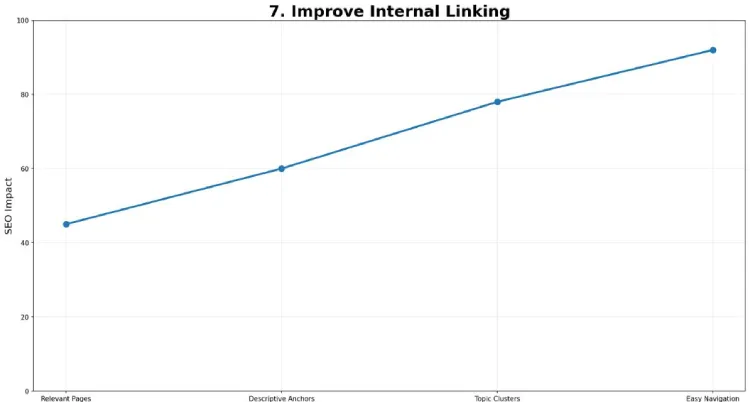
7. Improve Internal Linking
A strong website should have a logical structure.
Important pages should be easy to reach, while related topics should be connected through useful internal links.
For example:
SEO Website Analysis → Technical SEO → Keyword Research → On-Page SEO → Link Building → Local SEO
This structure helps users discover relevant information and helps search engines understand relationships between pages.
Use descriptive anchor text and avoid adding links simply for the sake of increasing link numbers
8. Analyze Backlinks
Backlinks can contribute to website authority, but quality and relevance matter.
During your analysis, review:
- Referring domains
- Relevant websites
- Anchor text
- New backlinks
- Lost backlinks
- Suspicious links
- Competitor backlinks
- Industry opportunities
A few relevant links from trustworthy websites can be more valuable than hundreds of irrelevant links.
The goal should be relevance, authority, context, and genuine value, rather than simply increasing backlink numbers.
9. Compare Your Website With Competitors
Competitor analysis reveals gaps that may not be obvious from your own website data.
Compare:
| SEO Factor | Your Site | Competitor |
| Keyword coverage | Review | Review |
| Content depth | Review | Review |
| Search intent | Review | Review |
| Backlinks | Review | Review |
| Internal links | Review | Review |
| Page speed | Review | Review |
| Topical authority | Review | Review |
| User experience | Review | Review |
Do not copy competitors.
Instead, identify what they cover that your website does not, then create something more useful, clearer, or more complete.
SEO Tool Comparison: Ahrefs, Semrush, Screaming Frog & GSC
Different tools are useful for different parts of an SEO audit.
Ahrefs is strong for backlinks, competitor research, keywords, and content opportunities.
Semrush offers a broad SEO platform covering keywords, site audits, competitors, rankings, and content optimization.
Screaming Frog is particularly useful for technical crawling, broken links, duplicate content, metadata, and redirects.
Google Search Console provides first-party Google search data, including queries, clicks, impressions, indexing, and page performance.
There is no single tool that is best for every task. A practical workflow can combine Google Search Console for search performance, Screaming Frog for technical issues, and Ahrefs or Semrush for keywords, competitors, and backlinks.
Personal Experience With SEO Website Analysis
In my experience, the best approach is to fix high-impact SEO issues first instead of changing everything at once. I check indexing, search intent, content quality, internal links, and authority before focusing on keyword optimization.
I also avoid keyword repetition. Natural language, useful information, and clear structure create stronger content than excessive keyword usage. SEO results take time, so consistent improvements are essential for long-term growth.
AI SEO, AEO & GEO SEO
Modern search is expanding beyond traditional Google results.
AI SEO
AI SEO focuses on making content easier for AI-powered systems to understand.
Useful practices include clear headings, direct answers, structured information, accurate facts, original research, strong topical coverage, expertise, and logical organization.
AI-generated content should also be reviewed carefully. Producing large amounts of automated text does not automatically create authority.
AEO
Answer Engine Optimization (AEO) focuses on answering questions directly.
Useful formats include:
- FAQs
- Definitions
- Step-by-step instructions
- Tables
- Bullet points
- Comparisons
- Direct answers
Answer early, then provide supporting detail.
GEO SEO
GEO SEO (Generative Engine Optimization) focuses on visibility in generative search experiences.
Strong GEO foundations include trustworthy information, expertise, original content, structured answers, accurate business information, and comprehensive topic coverage.
GEO should complement—not replace—traditional SEO.
Mobile & Local SEO Analysis
If your business serves a specific location, include local SEO in your audit.
Review your Google Business Profile, business information, reviews, local pages, location keywords, local backlinks, and structured data.
For mobile SEO, test navigation, font size, buttons, page speed, images, forms, pop-ups, and content visibility.
A website that works well on desktop but feels difficult to use on mobile can lose valuable visitors.
Common SEO Website Analysis Mistakes
Avoid these common problems:
Keyword stuffing: Repeating keywords excessively makes content unnatural.
Ignoring search intent: Ranking for a keyword is not enough if the page does not answer the user’s actual question.
Focusing only on technical SEO: Technical health matters, but content, authority, relevance, and UX matter too.
Publishing thin content: More pages do not automatically mean more traffic.
Buying poor backlinks: Quantity does not replace relevance and trust.
Ignoring existing content: Updating an old page can sometimes be more effective than creating another page on the same topic.
SEO Website Analysis Checklist
Before completing your audit, quickly check:
- Indexing & crawlability
- Mobile usability
- Page speed & Core Web Vitals
- Keywords & search intent
- Titles, meta descriptions & headings
- URLs & internal links
- Backlinks & competitor gaps
- Content quality
- Structured data
- Local SEO
- AI SEO
- AEO opportunities
- GEO SEO readiness
A complete checklist helps identify key issues and prioritize the improvements most likely to support better rankings.

How to Prioritize SEO Problems
Not every issue needs immediate attention.
High Priority
Fix problems that prevent search engines or users from accessing important pages.
Examples include noindex errors, major crawl problems, broken pages, serious mobile issues, and significant performance problems.
Medium Priority
Improve weak titles, internal linking, content structure, search intent, and content gaps.
Long-Term
Build authority through quality backlinks, digital PR, original research, topical authority, content clusters, brand visibility, AEO, and GEO optimization.
This system helps you focus on meaningful improvements instead of spending time on minor issues.
Final Verdict
A successful SEO Website Analysis goes beyond keywords and audit scores. It evaluates technical SEO, content, search intent, backlinks, Core Web Vitals, and competitors while supporting AI SEO, AEO, and GEO SEO.
Focus on creating a fast, useful, trustworthy website that answers users clearly. This builds a stronger foundation for higher rankings, more organic traffic, and sustainable SEO growth in 2026.
Frequently Asked Questions
What is SEO Website Analysis?
It is a detailed review of a website’s technical SEO, content, keywords, backlinks, performance, user experience, and search visibility.
How often should I perform an SEO audit?
A basic review can be performed monthly, while a deeper audit is useful every few months or after major website changes.
Can SEO analysis improve rankings?
The analysis itself does not improve rankings. The improvements made after identifying problems can strengthen relevance, technical health, user experience, and authority.
What is the best SEO analysis tool?
There is no single best tool. Google Search Console, Ahrefs, Semrush, and Screaming Frog each provide different types of SEO data.
Is SEO still important with AI search?
Yes. Strong technical SEO, useful content, authority, structured information, and clear answers remain valuable as search evolves.
What is the difference between SEO, AEO, and GEO SEO?
SEO focuses on search visibility, AEO focuses on direct answers, while GEO SEO focuses on visibility and representation within generative search experiences.






4 comments on “SEO Website Analysis: How to Boost Rankings in 2026?”
I really appreciated an engaging overview from start to finish today, and I look forward to reading more from you
Thank you! We’re delighted you enjoyed the article and appreciate your support. We look forward to sharing more great content with you!
This article gave me an engaging overview from start to finish while browsing online and I look forward to reading more from you
Thank you! We’re delighted you enjoyed the article and appreciate your support. We look forward to sharing more great content with you!