

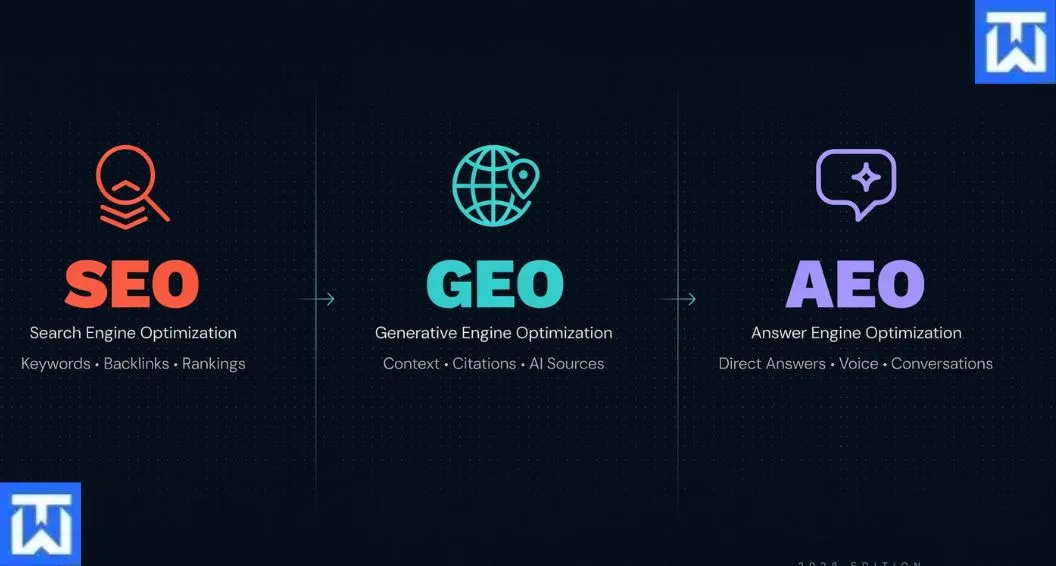
Search is no longer limited to Google. Users now rely on AI tools like ChatGPT, Gemini, Copilot, Claude, and Perplexity for quick answers. To stay visible, websites need more than traditional SEO.
This guide explains how SEO, GEO, and AEO work together to improve visibility across search engines, AI assistants, and modern search platforms in 2026.
Why Search Is Changing in 2026
Search behavior has shifted from typing keywords to asking complete questions. Instead of browsing multiple websites, users now expect instant answers from AI tools like ChatGPT, Google Gemini, Copilot, and Perplexity.
The Rise of Zero-Click Search
Features such as Google AI Overviews, Featured Snippets, voice search, and AI assistants often provide answers without users clicking a website. This makes creating accurate, well-structured content more important than ever.
Search Happens Everywhere
People no longer rely only on Google. A typical journey may include Google, ChatGPT, Reddit, YouTube, and Amazon before making a decision. To stay visible, businesses must optimize content for both search engines and AI-powered platforms.
What Is Search Engine Optimization (SEO)?
Search Engine Optimization (SEO) is the process of improving a website so search engines can crawl, understand, and rank its content. Its main goal is to increase organic traffic and help users find relevant information.
Why SEO Still Matters
SEO remains the foundation of online visibility, even in the AI era. AI tools rely on high-quality, well-optimized content to generate accurate answers. Strong SEO helps improve search rankings, attract the right audience, build authority, and increase your chances of being discovered by both search engines and AI platforms.
The Three Pillars of SEO
Successful SEO combines technical performance, valuable content, and online authority. These three areas work together to improve rankings and user experience.
1. Technical SEO
Technical SEO focuses on making your website easy for search engines to crawl and understand. Even excellent content can struggle to rank if technical issues prevent search engines from accessing it.
Key elements include:
- Fast page speed
- Mobile-friendly design
- Secure HTTPS connection
- XML sitemap
- Clean URL structure
- Canonical tags
- Structured data (Schema Markup)
- Core Web Vitals optimization
A technically healthy website improves both search engine indexing and user satisfaction.
2. On-Page SEO
On-page SEO involves optimizing the content users see on your website. The goal is to create pages that match search intent while providing valuable and easy-to-read information.
Important on-page factors include:
- Clear page titles
- Optimized meta descriptions
- Logical heading structure (H1, H2, H3)
- Natural keyword usage
- Internal linking
- Image optimization
- Readable formatting
- Helpful and original content
Modern on-page SEO focuses less on keyword repetition and more on answering users’ questions in a clear and comprehensive way.

3. Off-Page SEO
Off-page SEO strengthens your website’s reputation beyond your own domain. Search engines use these signals to evaluate trust and authority.
Common off-page strategies include:
- Earning quality backlinks
- Digital PR campaigns
- Guest posting
- Brand mentions
- Social media engagement
- Industry partnerships
- Expert interviews
Instead of chasing hundreds of low-quality links, focus on building a credible brand that others naturally reference.
Google’s E-E-A-T Framework
Google emphasizes creating content that demonstrates Experience, Expertise, Authoritativeness, and Trustworthiness (E-E-A-T). These principles help search engines identify content that genuinely benefits users.
To improve E-E-A-T:
- Share first-hand experience where relevant.
- Publish accurate and well-researched information.
- Display clear author profiles and contact details.
- Update articles regularly to keep them current.
- Cite trustworthy sources when using statistics or research.
Following these practices builds confidence with both readers and search engines, increasing the likelihood of better rankings and AI citations.
Common SEO Mistakes to Avoid
Many websites struggle because they focus on outdated tactics instead of user value. Avoid these common mistakes:
- Publishing duplicate or thin content
- Ignoring search intent
- Overusing keywords
- Buying low-quality backlinks
- Neglecting technical SEO
- Forgetting internal linking
- Publishing without regular updates
- Relying entirely on AI-generated text without editing
The most successful websites prioritize helpful, original, and well-organized content over shortcuts.
Why SEO Is the Foundation of Search Everywhere Optimization
SEO is the foundation of Search Everywhere Optimization. A fast, trustworthy, and well-optimized website helps both search engines and AI platforms understand, rank, and recommend your content. In the next section, we’ll explore Generative Engine Optimization (GEO) and how AI tools discover and reference high-quality content.
What Is Generative Engine Optimization (GEO)?
Generative Engine Optimization (GEO) is the process of optimizing content so AI platforms like ChatGPT, Google Gemini, Microsoft Copilot, Claude, Perplexity, and Google AI Overviews can understand, trust, and reference it. Unlike traditional SEO, which focuses on rankings, GEO helps your content become a reliable source for AI-generated answers.
Why GEO Matters in 2026
AI-powered search is becoming a normal part of everyday life. People now ask complete questions instead of typing short keywords.
For example:
- How do I improve my website’s AI visibility?
- What is the difference between SEO and GEO?
- Which SEO strategy works best in 2026?
Instead of searching multiple websites, users expect AI to provide instant, reliable answers.
This shift creates a new opportunity. Even if someone doesn’t immediately visit your website, your brand can still gain visibility when AI platforms reference your content. Over time, consistent AI mentions help build trust, authority, and brand recognition.
How AI Search Works
AI platforms evaluate content based on key factors such as authority, quality, structure, and freshness. They prefer websites with trusted reputations, original insights, accurate information, clear formatting, and regularly updated content.
Well-structured articles with headings, bullet points, examples, and useful data are easier for AI systems to understand and reference.
Best GEO Practices
1. Build Topical Authority
Publishing one excellent article is not enough. AI evaluates your overall expertise within a topic.
For example, an SEO website should also cover:
- Technical SEO
- On-Page SEO
- Off-Page SEO
- Keyword Research
- Link Building
- Google Search Console
- Schema Markup
- AI Search Optimization
A collection of related articles helps establish topical authority.
2. Create Original Content
One of the biggest ranking advantages today is originality.
Instead of rewriting existing articles, include:
- Personal observations
- Real examples
- Case studies
- Industry data
- Unique opinions
- Practical solutions
Original information gives AI systems a stronger reason to reference your content.

3. Strengthen Your Brand
AI increasingly recognizes brands instead of isolated webpages.
Build a consistent online presence through:
- Author profiles
- About page
- Social media
- Guest articles
- Podcasts
- Industry mentions
- Business listings
The stronger your brand, the more trustworthy your content appears.
4. Focus on Entities
Modern search engines understand entities, not just keywords.
Entities include:
- People
- Companies
- Products
- Technologies
- Locations
- Organizations
Instead of repeating the same keyword, explain related concepts naturally. This helps AI understand the context of your content and improves semantic relevance.
5. Improve Readability
AI-friendly content is also reader-friendly.
Write using:
- Short paragraphs
- Simple language
- Clear headings
- Bullet lists
- Practical examples
Avoid unnecessary jargon unless your audience expects technical explanations.
What Is Answer Engine Optimization (AEO)?
Answer Engine Optimization (AEO) focuses on organizing content so search engines and AI assistants can quickly extract direct answers to users’ questions.
Instead of encouraging users to read an entire article, AEO delivers concise, accurate answers that appear in:
- Google AI Overviews
- Featured Snippets
- Voice Search
- ChatGPT summaries
- Microsoft Copilot
- Perplexity AI
As more people search using natural language, AEO has become an essential part of modern content strategy.
Why AEO Is Important
Users increasingly ask complete questions, such as:
- What is GEO?
- How does AEO work?
- Why is schema markup important?
- Which SEO tools should beginners use?
Answer-first content improves user experience because readers receive valuable information immediately.
This approach also increases the chances of appearing in featured snippets and AI-generated responses.
Best Practices for AEO
Effective AEO focuses on providing clear, direct answers that AI systems can easily understand.
Key practices include:
- Answer questions first with short, accurate responses.
- Use question-based headings to match user search intent.
- Add FAQ sections to improve AI understanding and search visibility.
- Organize content clearly using bullet points, lists, and tables.
- Use Schema Markup to help search engines identify your content.
These strategies improve readability, user experience, and AI search visibility.
What Is Search Everywhere Optimization?
Search behavior is no longer limited to Google. People discover information through search engines, AI assistants, video platforms, forums, marketplaces, and social media.
Search Everywhere Optimization is the strategy of creating content that performs well across all of these channels.
Instead of optimizing only for Google rankings, you also optimize for:
- Google Search
- Google AI Overviews
- ChatGPT
- Google Gemini
- Microsoft Copilot
- Claude AI
- Perplexity AI
- YouTube
- GitHub (technical topics)
- Amazon (product searches)
The objective is simple: make your content discoverable wherever users search for information.
Why Combining SEO, GEO, and AEO Delivers Better Results
These three strategies complement one another rather than compete.
- SEO improves your website’s visibility in traditional search results.
- GEO increases the likelihood that AI platforms reference your content.
- AEO helps your pages provide clear answers that appear in AI summaries and featured snippets.
When combined, they create a stronger long-term strategy that supports organic traffic, AI visibility, and brand authority. Instead of focusing on rankings alone, your content becomes useful across multiple search experiences, preparing your website for the future of digital discovery.
Advanced SEO, GEO & AEO Strategies for 2026 (Continued)
Advanced Strategies for Long-Term Visibility
Getting traffic from Google alone is no longer enough. In 2026, successful websites build authority across search engines, AI assistants, forums, social platforms, and video channels. The goal is to become a trusted source wherever users search for information.
Focus on E-E-A-T
Google continues to prioritize Experience, Expertise, Authoritativeness, and Trustworthiness (E-E-A-T). These signals also help AI systems identify reliable content.
Improve E-E-A-T by:
- Sharing real-world experience
- Writing about topics you understand well
- Using accurate and updated information
- Adding author profiles and contact details
- Maintaining a professional website
Readers and AI systems are more likely to trust content written by experts with practical knowledge.
Create Topic Clusters Instead of Single Articles
Publishing random articles makes it difficult for search engines to understand your expertise.
Instead, organize content into topic clusters.
For example, if your main topic is SEO, create supporting articles such as:
- Technical SEO Guide
- On-Page SEO Checklist
- Local SEO
- Link Building Strategies
- Schema Markup Guide
- Keyword Research
- AI Search Optimization
- SEO Audit Checklist
Link these pages together using internal links.
This approach improves topical authority and helps both Google and AI models understand your website.

Optimize for AI Crawlers
AI companies now use dedicated crawlers to discover public content.
Examples include:
- GPTBot
- ClaudeBot
- PerplexityBot
- Google-Extended
- Bingbot
Before blocking these crawlers, consider whether you want your content to appear in AI-generated answers. Allowing trusted AI crawlers can increase your chances of being referenced in AI search results.
Use Structured Data
Schema markup helps machines understand your content more accurately.
Useful schema types include:
- Article
- FAQ
- Organization
- Person
- Product
- Breadcrumb
- Review
- HowTo
Although schema doesn’t guarantee rankings, it improves machine readability and increases eligibility for rich search results.
Improve Technical SEO
Technical SEO remains the foundation of online visibility.
Focus on:
- Fast page speed
- Mobile-friendly design
- HTTPS security
- XML sitemap
- Clean URLs
- Proper canonical tags
- Core Web Vitals
- Easy crawlability
A technically optimized website provides a better experience for users and search engines alike.
Build a Recognizable Brand
Brand authority is becoming one of the strongest ranking signals.
Strengthen your brand by:
- Publishing consistent, high-quality content
- Creating professional author pages
- Staying active on LinkedIn, YouTube, and other relevant platforms
- Earning mentions from reputable websites
- Participating in industry communities
People trust familiar brands, and AI systems often recognize those same authority signals.
Update Existing Content
Publishing new articles is important, but updating older content is equally valuable.
Regularly review your articles and update:
- Statistics
- Screenshots
- Examples
- Broken links
- Product recommendations
- New AI features
- Search trends
Fresh content remains useful and continues to perform well over time
Common SEO, GEO & AEO Mistakes
Avoid these common mistakes:
- Publishing duplicate content
- Writing only for search engines
- Ignoring user intent
- Overusing keywords
- Using unedited AI-generated text
- Building spammy backlinks
- Ignoring internal linking
- Publishing outdated information
- Neglecting mobile optimization
- Forgetting technical SEO
Long-term success comes from creating useful, trustworthy content rather than chasing shortcuts.
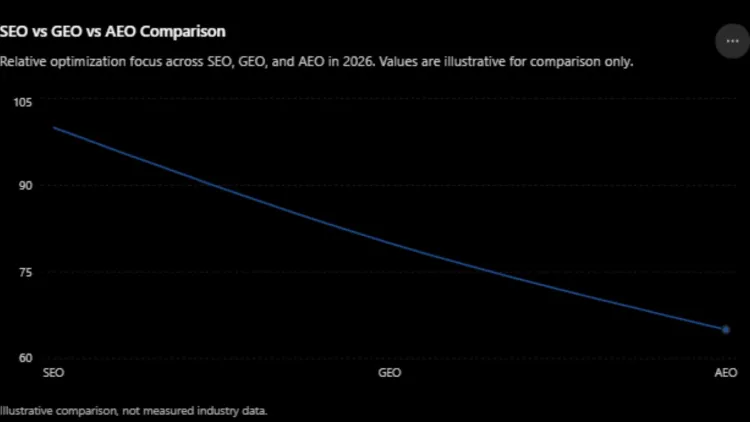
SEO vs GEO vs AEO Comparison
| Feature | SEO | GEO | AEO |
| Primary Goal | Rank webpages | Become an AI source | Deliver direct answers |
| Main Audience | Search engines | AI models | Answer engines |
| Focus | Keywords and relevance | Authority and entities | Questions and concise answers |
| Success Metric | Organic traffic | AI citations | Featured snippets and AI answers |
| Content Style | Comprehensive | Trustworthy | Clear and direct |
The strongest websites combine all three strategies instead of relying on just one.
Search Everywhere Optimization
Search behavior has expanded beyond Google.
Today, users may:
- Ask ChatGPT
- Search Google
- Read Reddit discussions
- Watch YouTube reviews
- Browse LinkedIn posts
- Compare products on Amazon
- Look for opinions on forums
This shift has created Search Everywhere Optimization, where brands optimize content for every platform users rely on to discover information.
Practical Strategy for 2026
If you’re starting a website today, follow this approach:
Step 1: Choose one niche and stay focused.
Step 2: Publish comprehensive articles that fully answer user questions.
Step 3:Create supporting content around your main topic.
Step 4: Use clear headings and conversational language.
Step 5 Add original examples, research, or personal experience.
Step 6: Improve website speed and mobile usability.
Step 7: Earn high-quality backlinks naturally.
Step 8:Update important articles every few months.
Step 9:Strengthen your brand across multiple platforms.
Step 10: Measure performance using Google Search Console and analytics tools.
SEO, GEO & AEO Checklist
Before publishing content, make sure you:
✔ Match search intent
✔ Use clear headings
✔ Add semantic keywords
✔ Include internal and external links
✔ Optimize images and page speed
✔ Write strong titles and descriptions
✔ Add schema markup and FAQs
✔ Ensure mobile-friendly design
✔ Fact-check and update information
This checklist improves search rankings and AI visibility.
Conclusion
Search has evolved beyond Google alone, with users now finding information through AI assistants, social platforms, forums, and video content. To stay competitive, websites must optimize for more than traditional search.
SEO builds strong search visibility, GEO improves AI recognition and citations, and AEO helps deliver clear answers in AI-powered results. Together, they form Search Everywhere Optimization, a strategy designed for the future of digital search.
In 2026, success will come from creating original, trustworthy, and user-focused content while continuously improving your website for both search engines and AI platforms.
Frequently Asked Questions
Is SEO still important in 2026?
Yes. SEO remains the foundation of digital visibility. Strong technical SEO, helpful content, and authority are still essential for ranking in search engines and being recognized by AI platforms.
Can GEO replace SEO?
No. GEO complements SEO by improving your chances of being cited by AI assistants. Strong SEO makes GEO more effective.
What is the difference between GEO and AEO?
GEO helps AI models recognize and reference your content, while AEO structures content so search engines and AI assistants can quickly extract direct answers.
Which platforms should businesses optimize for?
Focus on platforms your audience uses most, including Google Search, Google AI Overviews, ChatGPT, Google Gemini, Microsoft Copilot, Claude, Perplexity, YouTube, and Reddit.
Does AI-generated content rank well?
It can, but only when it is reviewed, fact-checked, and enhanced with original insights and real expertise. High-quality, human-edited content performs far better than unedited AI text.



2 comments on “How Do SEO, GEO & AEO Improve Search in 2026?”
I found helpful details I had not seen elsewhere when I needed it most and I look forward to reading more from you
Thank you! We’re glad you found the information helpful and look forward to seeing you again soon.