

Marketing automation is changing how businesses attract, engage, and convert customers. Instead of spending hours on repetitive marketing tasks, businesses can automate email campaigns, lead nurturing, customer follow-ups, social media scheduling, and much more.
Whether you run a startup, small business, eCommerce store, or enterprise company, marketing automation helps you save time, improve customer experience, generate more qualified leads, and increase ROI.
In this complete guide, you’ll learn what marketing automation is, how it works, its benefits, best tools, AI-powered automation, and how to build successful automated marketing workflows.
What is Marketing Automation?
Marketing automation is software that automates repetitive marketing tasks using workflows, customer data, AI, and predefined triggers. It allows businesses to send the right message to the right customer at the right time without manual effort.
Instead of manually sending emails or following up with every lead, marketing automation platforms perform these actions automatically based on customer behavior.
For example, when someone downloads your free ebook, the system can automatically:
- Send a welcome email
- Deliver the ebook
- Start an email sequence
- Score the lead
- Notify the sales team
- Recommend related products
This creates a personalized customer journey while saving valuable time.
How Does Marketing Automation Work?
Marketing automation works through triggers, conditions, and actions.
A customer acts such as:
- Filling out a form
- Visiting a landing page
- Clicking an email
- Purchasing a product
- Abandoning a shopping cart
The automation platform detects that action and immediately starts a predefined workflow.
A typical workflow looks like this:
Visitor → Form Submission → Welcome Email → Educational Content → Lead Score Update → Sales Notification → Customer Conversion
Modern AI-powered marketing automation also analyzes customer behavior to optimize campaigns automatically.
Why Marketing Automation Matters
Today’s customers expect personalized experiences across multiple channels.
Without automation, businesses often struggle with:
- Slow follow-ups
- Lost leads
- Manual data entry
- Low email engagement
- Poor customer experience
Marketing-automation solves these problems by creating consistent, personalized communication at scale.
Businesses using marketing automation often experience:
- Higher conversion rates
- Better customer engagement
- More qualified leads
- Increased sales
- Improved marketing ROI
- Better customer retention
Key Benefits of Marketing Automation
Save Time and Increase Productivity
Marketing teams spend less time on repetitive work and more time on strategy, content creation, and business growth.
Routine tasks like email campaigns, social media scheduling, and lead follow-ups become fully automated.
Generate More Qualified Leads
Marketing-automation tracks user behavior and assigns lead scores based on engagement.
Sales teams receive only high-quality leads, improving conversion rates and reducing wasted effort.
Personalize Every Customer Journey
Customers receive personalized emails, product recommendations, and offers based on their interests and actions.
Personalization improves trust, engagement, and customer satisfaction.
Improve Email Marketing Performance
Automated email sequences consistently outperform one-time campaigns.
Businesses can automatically send:
- Welcome emails
- Follow-up emails
- Product recommendations
- Cart recovery emails
- Re-engagement campaigns
- Birthday offers
This increases open rates, click-through rates, and conversions.

Increase ROI
Marketing automation reduces manual work while improving campaign performance.
Businesses can generate more revenue without increasing marketing costs, making automation one of the highest-ROI digital marketing investments.
Essential Features of Marketing Automation
A powerful marketing automation platform should include:
- Email automation
- Workflow automation
- CRM integration
- Lead scoring
- Customer segmentation
- Landing pages
- AI recommendations
- SMS automation
- Social media scheduling
- Analytics dashboard
- A/B testing
- Multi-channel marketing
- Customer journey tracking
These features help businesses automate marketing from lead generation to customer retention.
AI Marketing Automation
AI has transformed traditional marketing-automation into intelligent automation.
AI marketing automation can:
- Predict customer behavior
- Recommend products
- Generate personalized content
- Optimize email send times
- Improve customer segmentation
- Analyze campaign performance
- Create AI-powered workflows
- Increase conversion rates
AI helps marketers make smarter decisions using real-time customer data.
Best Marketing Automation Workflows
Every business should start with simple workflows before creating advanced automation.
Popular workflows include:
Welcome Email Automation: Automatically welcome new subscribers and introduce your brand.
Lead Nurturing: Educate prospects with valuable content until they’re ready to buy.
Cart Abandonment: Recover lost sales by reminding customers about unfinished purchases.
Customer Onboarding: Help new customers learn your product through automated tutorials.
Re-engagement Campaigns: Reconnect with inactive subscribers using personalized offers.
Review Requests: Automatically ask satisfied customers for reviews after a purchase.
Best Marketing Automation Tools
Several marketing-automation platforms help businesses automate their marketing efforts.
Popular options include:
- HubSpot
- ActiveCampaign
- Mailchimp
- Brevo
- Klaviyo
- Omnisend
- Marketo
- Pardot
- GetResponse
- ConvertKit
The best platform depends on your business size, budget, and marketing goals.
Marketing Automation Best Practices
To achieve the best results, follow these proven strategies.
- Keep your customer data clean.
- Create clear marketing goals.
- Build simple workflows first.
- Segment your audience.
- Personalize every campaign.
- Test emails regularly.
- Monitor analytics weekly.
- Optimize workflows continuously.
- Integrate your CRM.
- Use AI to improve performance.
Consistent optimization leads to better engagement and long-term business growth.
You can add references naturally within the paragraph like this:
Our Experience with Marketing Automation
From our experience working on digital marketing strategies, one of the biggest challenges businesses face is following up with every lead consistently. Manual marketing often results in missed opportunities, delayed responses, and lower conversion rates. Industry leaders such as HubSpot, Salesforce, and Adobe also emphasize that automating repetitive marketing tasks helps businesses improve efficiency and build stronger customer relationships.
After implementing marketing-automation workflows, businesses can streamline lead nurturing, automate email sequences, schedule social media content, and track customer behavior from a single platform. This not only saves valuable time but also helps deliver a more personalized customer experience. According to HubSpot and Oracle, businesses that use marketing automation can improve lead management, personalize customer interactions, and achieve better marketing ROI.
We’ve also observed that businesses using automation with a CRM and AI-powered tools make better marketing decisions because they can analyze customer data, improve campaign performance, and optimize conversions through real-time insights. Salesforce, Adobe Marketo, and Mailchimp highlight that combining AI with marketing-automation enables smarter segmentation, predictive analytics, and more effective customer engagement. The key to success is starting with simple workflows, monitoring results regularly, and continuously improving your automation strategy.

Common Marketing Automation Mistakes
Many businesses fail because they automate poor marketing processes.
Avoid these common mistakes:
- Sending too many emails
- Ignoring customer segmentation
- Poor lead scoring
- Not testing workflows
- Using outdated customer data
- Forgetting mobile optimization
- Focusing on automation instead of customer experience
Successful automation always prioritizes the customer.
Marketing Automation vs Email Marketing
Many people think both terms mean the same thing.
Email marketing sends individual campaigns to subscribers.
Marketing-automation goes much further by creating automated customer journeys using email, CRM data, AI, SMS, landing pages, social media, and behavioral triggers.
Email marketing is one part of a complete marketing-automation strategy.
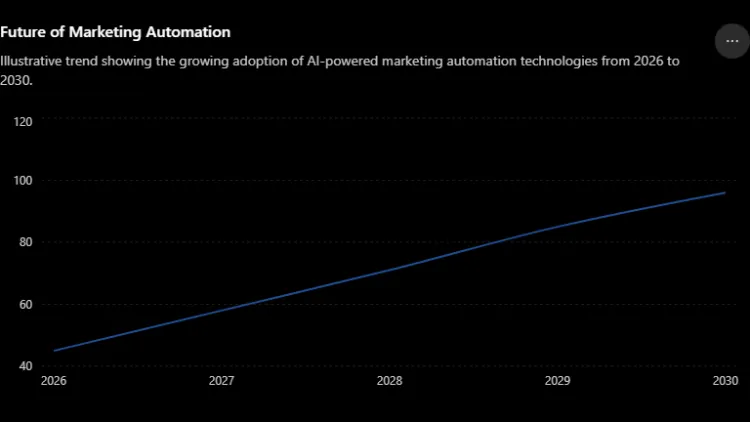
Future of Marketing Automation
Artificial Intelligence, predictive analytics, machine learning, and conversational marketing power the future of marketing automation.
Businesses will increasingly use AI to:
- Predict customer intent
- Automate personalization
- Improve lead qualification
- Optimize campaigns automatically
- Deliver real-time customer experiences
Companies that adopt AI-powered marketing-automation today will gain a significant competitive advantage.
Final Thoughts
Marketing-automation is no longer optional for businesses that want to grow faster in today’s competitive digital landscape. By automating repetitive marketing tasks, nurturing leads, personalizing customer experiences, and using AI-driven insights, businesses can improve efficiency while increasing revenue.
Start with simple workflows, focus on customer needs, analyze your data regularly, and optimize continuously. With the right marketing-automation strategy, you can generate more qualified leads, strengthen customer relationships, and achieve sustainable business growth in 2026 and beyond.
Frequently Asked Questions
1. What is marketing automation?
Marketing-automation is software that automates repetitive marketing tasks such as email campaigns, lead nurturing, customer segmentation, social media scheduling, and follow-ups. It helps businesses save time, improve customer engagement, and increase conversions.
2. What are the benefits of marketing automation?
Marketing-automation offers several benefits, including higher lead generation, personalized customer experiences, improved email marketing, better lead management, increased productivity, and a stronger return on investment (ROI).
3. Is marketing automation suitable for small businesses?
Yes. Marketing automation is ideal for small businesses because it reduces manual work, automates customer communication, nurtures leads, and helps businesses grow without needing a large marketing team.
4. What tasks can be automated with marketing automation?
Marketing automation can automate email campaigns, lead nurturing, social media scheduling, follow-ups, CRM updates, SMS marketing, and customer onboarding.
5. How does AI improve marketing automation?
AI enhances marketing automation by analyzing customer behavior, personalizing content, predicting customer actions, optimizing email send times, improving audience segmentation, and increasing campaign performance through data-driven insights.