
| Google’s AI Citation does not cite the page that shouts the loudest. It reads many pages, picks a few that answer the question clearly, with real facts and a clean structure it can trust, and places their links inside the answer itself. Since 15 October 2026, those inline links sit higher and appear more often in AI Mode and AI Overviews. To get cited, your business must do the same things this article teaches: answer one question at a time in short, clear blocks, prove your facts, keep your pages fast and indexed, and track every citation like money — because that is what citation equity is. |
For twenty years, search worked like a noticeboard. You put up the best poster, Google ranked it, and people walked past and clicked. That game is still running — but a second game has started beside it, and most businesses have not noticed they are losing it.
In the new game, Google answers the question itself, at the top of the page, in its own words. Then — and this is the part that decides your future — it names the sources it took the answer from. Those names and links, placed inside the answer, are citations. If your business is one of them, you win trust before the reader has even visited your site. If you are not, a competitor is standing in your place, inside an answer your customer already believes.
This article explains the new citation scheme in plain words: what changed, how Google AI chooses its sources, why governments are now asking questions about it, and the exact system — four pillars, free fixes first — that a small business can use to get cited. No jargon without an explanation. No tricks. Every point comes with a small story, labelled as a teaching example, so you can see the idea working in a real shop.
Table of Contents
Toggle1. What changed on 15 October 2026: the links moved inside the answer
On 15 October 2026, Google changed how links appear in its AI answers. In AI Mode and in AI Overviews, inline links — the source links woven directly into the sentences of the AI answer — began appearing higher up and more often. That sounds like a small design change. It is not. It changes what a link is worth.
Before, a citation could sit quietly at the bottom of an AI answer, in small print, where few readers looked. Now the link sits inside the answer itself, next to the claim it supports. A reader who trusts the answer sees your name at the exact moment they are believing the sentence. That is the most valuable few centimetres on the whole search page.
Why it matters, in numbers you can check. Research published by Pew in July 2025 found that people clicked a traditional search result in about 8% of visits when an AI summary was present, compared with about 15% when there was no AI summary. Separate research by Ahrefs in December 2025 found the click-through rate of the top-ranking page fell by about 58% when an AI Overview appeared — a figure Google disputes in aggregate, and we present it as Ahrefs’ finding, not as settled fact. Read those two studies together and the lesson is the same either way: the AI answer takes attention first, so the links inside the answer are where the remaining trust and clicks live.
Teaching example: Think of a market. Before, your shop had a stall and customers walked the rows looking at every stall — those are the blue links. Now a guide stands at the gate and answers questions for the crowd: “The best honey is at the third stall — I checked.” Customers still walk the rows, but most of them walk straight to the stall the guide named. On 15 October, the guide started naming stalls louder, earlier, and more often. Your job is no longer only to have a good stall. It is to be named by the guide.
That is the citation scheme in one sentence: Google AI reads, decides, answers — and names its sources inside the answer. Everything else in this article is about how to be one of the named.
2. Rankings vs citations: the game split in two
Rankings are not dead. Let us be clear about that, because bad advice starts with panic. Your position in the normal results still brings clicks, and the pages Google ranks well are often the same pages its AI reads. But ranking and being cited are not the same prize, and they are not measured the same way.
A ranking is a place in a queue. A citation is a quote in an answer. You can rank fifth and be cited first. You can rank first and never be quoted at all — because your page, however well optimised for keywords, does not give the AI a clean, quotable answer it can lift with confidence. The old scoreboard counted search volume and position. The new scoreboard counts citation equity: your share of the citations in your market, the trust those citations build, and the clicks, leads and sales that follow from them.
Figure 1 — The game split in two: rankings still matter, but citations are the new game. Play both — win the new one first.
Table 1 — Rankings vs citations, side by side
| Rankings (old game) | Citations (new game) | |
| Goal | Rank #1 in the blue links | Be cited inside the AI answer |
| Prize | A click from the results list | Trust first, then the click |
| Measured by | Position and search volume | Citation equity: how often AI names you |
| What wins it | Keywords, links, technical SEO | Clear answers, real facts, clean structure |
| Main risk | AI answer above you takes the click | Invisible if AI never quotes you |
| Still needed? | Yes — AI reads ranked pages | Yes — this is where attention moved |
Teaching example: Two shoe shops sit on the same street. Shop A pays to be first in the directory — that is ranking. Shop B is the one the town’s trusted guide names when a visitor asks, “Where do I buy shoes for flat feet?” — that is citation. On a quiet day, both sell. On a busy day, when the crowd asks the guide first, Shop B sells out. Google’s AI is now the guide at the gate of the whole internet, and on 15 October it started naming names more often.
3. How Google AI chooses a source, step by step
The AI does not keep a secret list of favourite websites. For each question, it works like a fast, careful researcher — and understanding its five steps tells you exactly where your page can win or lose.
- Step 1 — Someone asks. A person asks a question in their own words — “best running shoes for flat feet?”, not a neat keyword.
- Step 2 — AI reads widely. The AI searches its index and reads far more pages than any human would — hundreds of candidates for a single answer.
- Step 3 — AI picks a few clear sources. It keeps the few pages that answer the question directly, agree with the known facts, and are easy to extract a clean answer from.
- Step 4 — The answer shows inline links. It writes the answer in its own words and places inline links beside the claims each source supports — higher and more often since 15 October 2026.
- Step 5 — The reader clicks the cited source. The reader, already trusting the answer, clicks a cited source to check, compare, or buy.
Figure 2 — How Google AI cites you: from a question to a click, in five steps.
Notice where the contest is decided: Step 3. By Step 4 your fate is sealed. Pages lose at Step 3 for boring, fixable reasons — the answer is buried in a long story, the page contradicts itself, there are no clear facts to lift, or the page loads so slowly or is indexed so poorly that it was never really read at Step 2 at all.
Teaching example: A teacher asks a class a question and picks three students to answer in front of everyone. She does not pick the loudest student. She picks the ones who put a hand up, speak in short clear sentences, and have their book open at the right page. Your page is a student in that class, for every question your customers ask. Short, clear, open at the right page — that is the whole posture of a citable page.
4. What AI Citation looks for when it picks a source
No one outside Google has the full formula, and anyone who sells you one is guessing. But the signals below are the ones that show up again and again when you study which pages get cited — and every one of them is something a small business can improve without a big budget.
Table 2 — What AI looks for when it picks a source
| What AI looks for | What it means in plain words | How your page shows it |
| A direct answer | The question is answered in the first lines, not at the end | A short answer block under each heading |
| Clear structure | Headings, short paragraphs, lists and tables it can read fast | One idea per section; real headings, not bold text |
| Real facts | Names, prices, dates and specifics — not vague claims | Show prices, sizes, delivery times and dates |
| Trust signals | A real business, a named author, consistent details everywhere | About page, contact details, reviews, same name and address everywhere |
| Freshness | The page is current and says when it was updated | Update old posts; show an updated date |
| Agreement | Other trusted sources say the same thing about you | Get listed and mentioned on reputable sites in your niche |
| Speed and access | The page loads fast and Google can actually index it | Fix page speed; check the page is in the sitemap and indexed |
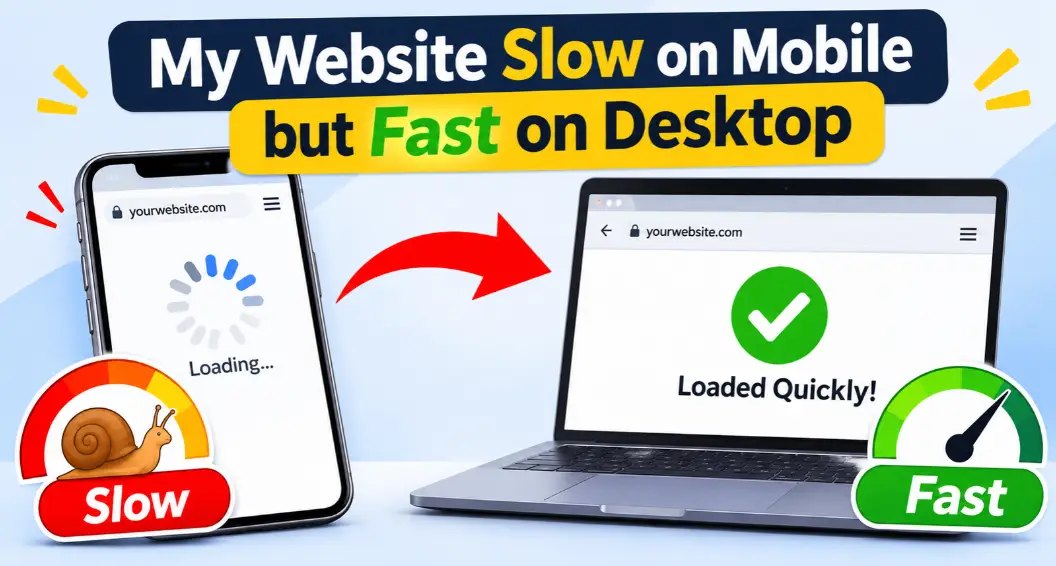
Speed deserves its own line, because a slow page is a closed book. If your page takes too long to open — especially on a phone — both people and AI read less of it. Start with our pillar guide, Page Speed and Website Performance, and if your site is fast on desktop but slow on mobile — the most common complaint we see — read Why Is My Website Slow on Mobile but Fast on Desktop?
These are free fixes, and they come before anything fancy in this article.
Teaching example: Imagine the AI as a shopper with ten seconds and a notebook. It opens your page and asks: “Can I copy one true, useful sentence from here, and trust it in front of my reader?” A page with a clear answer, a price, and a date lets it copy the sentence and move on. A page with a long welcome story, no prices and three pop-ups makes it close the notebook and cite your competitor instead.
5. The Turkey investigation: why the rules of citation are still being written
If citations decide who gets seen, the next question is obvious: who decides whether that system is fair? On 2 November 2026, Turkey’s competition authority opened an investigation into Google’s AI Overviews and AI Mode. To be precise about what that means: an investigation is a set of questions, not a verdict. Nothing has been decided, and this article reports it as an open case.
The questions at the heart of the investigation, as the case was opened, are three — and every publisher and shop owner should know them, because they describe the bargain behind every citation:
- Same fair terms for all. every publisher should be treated on fair terms, not favoured or pushed aside without reason.
- Terms that reflect real value. the terms on which content is used should reflect the real value of that content — if an answer is built from your work, that work has value.
- A real opt-out. a publisher should be able to opt out of AI use without being punished by losing its normal place in search.
Why should a small shop care about a regulator in another country? Because this case is proof, in public, that citations are now valuable enough to fight over. When governments start asking who gets cited and on what terms, it tells you the citation is not a decoration — it is property. The rules will keep moving for a while. Businesses that build citation equity now, while the scheme is young, are buying land before the town is built.
Teaching example: Think of the first years of a new market hall. The best stalls go to the traders who arrive early, set up properly and get known by name. Later, everyone wants those stalls, and officials start writing rules about who gets them and why. The Turkey investigation is the sound of the rule-book being opened. It is not a reason to wait — it is a reason to set up your stall properly, now, while the hall is still filling.
6. From search volume to citation equity: the 4 pillars of GEO
GEO — generative engine optimization — is SEO’s younger sibling: the work of getting found and cited by AI answers, not only ranked by search engines. Old SEO asked, “How much search volume does this keyword have?” GEO asks a better question: “How much citation equity can we earn — how often, and how well, does AI name us when our customers ask?” The system we use at Techish Web and Weaver Expert has four pillars. Each one answers one question.
Figure 3 — The 4 pillars of citation equity: search volume → citation equity.
Pillar 1 — Citation Mapping. Find out what AI already cites in your niche, and where you are missing. Ask the questions your customers ask, in Google AI Mode and AI Overviews, and write down every source named. That map is your true competitive landscape — it often looks nothing like the ranking table, and that difference is your opportunity.
Pillar 2 — Equity Analysis. Measure which sources AI trusts most, and why your page is not one of them — yet. Compare the cited pages with yours: answer length, structure, facts, freshness, trust signals. The gap between their pages and yours, written down honestly, becomes your work list.
Pillar 3 — Strategic Placement. Put clear, quotable answers where AI looks. Short answer blocks, question-shaped headings, real facts and clean pages — placed on the pages and topics your map says AI is already rewarding. This is placement with a map, not publishing and hoping.
Pillar 4 — Attribution Tracking. Follow each citation to the click, the lead, and the sale, so you know what worked. A citation you cannot track is a rumour. Tracked, it is an asset you can grow on purpose — and that tracked share of citations in your market is your citation equity.
Teaching example: A fruit farmer used to ask, “How many people walk past my road?” — that is search volume. The smarter farmer asks, “When the town guide sends people to buy fruit, how often does he send them to me, and how much do they buy?” — that is citation equity. Footfall is weather. Being named by the guide is a relationship. Relationships can be built, measured, and kept.
7. How a small business gets cited: free and cheap fixes first
You do not need a new website, a big agency, or paid tools to start earning citations. You need your existing pages to answer questions the way AI likes to quote. Work through these fixes in order — the first five are free and take an afternoon each at most.
- Put the answer first. Open your most important page and check the first lines. If a stranger cannot find the answer to the page’s main question in the first two or three sentences, rewrite the opening. AI quotes beginnings.
- Use question headings. Turn your headings into the questions customers actually ask — “How long does delivery take?” beats “Delivery information” — and answer each one directly underneath in two to four short sentences.
- Add real facts and numbers. Add the facts only you know: your real prices, sizes, delivery times, service area, opening hours, and dates. Facts are the most quotable things on the internet, and competitors cannot copy yours.
- Add a summary block and a table. Give every article one summary block near the top — like the short answer at the top of this article — and one simple table or list. AI lifts structured content because it is easy to verify and quote.
- Check you are indexed. Confirm the page is in your sitemap, request indexing in Google Search Console, and fix anything that blocks it. A page that is not indexed cannot be cited — this trap has caught real sites, including blog pages that were live for weeks before anyone noticed they were missing from the sitemap.
- Speed up and link together. Fix your slowest page, starting with large images on mobile. Then link your related articles to each other, so AI can see the whole topic lives on your site, not just one lonely page.
Teaching example — a small online store, step by step: Example store: a small online shop selling running shoes. Its product page opened with a long story about the owner’s love of running, and the size guide was a photograph of a chart. Following the fixes above, the owner moved one sentence to the top — “Sizes run small: order half a size up; delivery in 3–5 days; free returns within 30 days” — turned the photo chart into a real text table, and added a question heading, “Are these shoes good for flat feet?”, with a three-sentence answer. Nothing was bought, and no one was hired. But the page changed from a story AI could only admire into a page AI can quote — and quotable is what gets cited. (This store is a teaching example, not a client case.)
When the free fixes are done, the cheap next step is consistency: the same business name, address, and details on your site, your Google Business Profile, and your social pages, plus a small number of honest mentions on reputable sites in your niche. AI trusts what agrees with itself.
8. Traps to avoid: the mistakes that make AI skip you
AI does not reject most pages. It skips them —quietly, for avoidable reasons. These are the traps we see most often, in order of how much damage they do.
- Trap 1 — Not indexed, not cited. If your page is not indexed, or your blog is missing from your sitemap, you are not in the library at all. Check this before any other work — it is free, and it is the trap behind many “SEO does not work” stories.
- Trap 2 — Burying the answer. Long introductions, company history, and keyword-stuffed paragraphs give AI nothing clean to lift. The answer must be findable in seconds, by a machine in a hurry.
- Trap 3 — Fake or unsourced facts. Made-up statistics, borrowed claims, and “everyone knows” facts poison a page. If AI cross-checks your claim and finds it nowhere else — or finds the opposite — your whole site’s trust falls. Only publish figures you can source, exactly as this article does.
- Trap 4 — Copying the cited page. Rewriting a competitor’s cited page word for word does not transfer their citation. AI already has that answer from them; a copy adds nothing and earns nothing.
- Trap 5 — Tricks aimed at the machine. Hiding text for AI, showing machines a different page than people see, or buying batches of low-quality mentions are the citation game’s version of buying fake reviews. Schemes like these are exactly what investigations and updates punish.
- Trap 6 — Winning once, then stopping. Citations are not a lottery ticket you buy once. A page cited in January and left stale while competitors update will quietly be replaced. Review your mapped questions every month.
Teaching example: Two students again. One studies a little every week and keeps his notes tidy. The other crams the night before with borrowed notes he does not understand, and writes his name in three places hoping the teacher notices. In the first month, both may pass. Over a year, only one of them is still being picked to answer. AI is that teacher, and it has a very long memory for tidy notes.
9. Your week-one checklist: start today, spend nothing
Do one row a day. By next week, your site will be easier for AI to read, quote, and cite than it has ever been — and you will have the map that tells you what to do in week two.
Table 3 — Week-one checklist
| Day | Action (free) | Done when |
| Day 1 | Ask AI Mode / AI Overviews your 5 main customer questions; note every source cited | You have a citation map on paper |
| Day 2 | Rewrite the opening of your most important page so the answer comes first | A stranger gets the answer in 3 lines |
| Day 3 | Turn 3 headings into customer questions; add a short answer under each | 3 question-and-answer blocks live |
| Day 4 | Add your real facts: prices, sizes, delivery, area, hours, dates | Facts are in text, not only in images |
| Day 5 | Check indexing and sitemap in Google Search Console; request indexing | Your key pages show as indexed |
| Day 6 | Compress your largest images; test your slowest page on a phone | The page opens fast on mobile |
| Day 7 | Link your related pages together; re-ask the Day 1 questions and compare | You can see what changed — and what is next |
Get cited: your next step
You now know the scheme: AI reads many pages, cites a few, and puts their links inside the answer — higher and more often than ever since 15 October 2026. You know the four pillars that turn citations into a system instead of luck. The only question left is the one Citation Mapping answers: when your customers ask their questions today, who does AI name — you, or your competitor?
Find out, for free. Techish Web and Weaver Expert offer a free AI-search audit: we ask the questions your customers ask, map who AI cites in your market, check your pages against the signals in this article, and hand you a plain-English list of fixes — free and cheap ones first, in the same order as this article. No obligation, and no tricks aimed at machines: just your citation map, your gaps, and your week-one plan, done for you.
Ask for your free AI-search audit today, and start earning citation equity while your competitors are still only watching their rankings.
10. Frequently asked questions
These five answers are written to be quoted — by readers, and by AI itself. That is not an accident; it is the technique this article teaches, applied to itself.
What is a citation in Google’s AI answers?
A citation is the source link Google AI places inside its answer — in AI Overviews and AI Mode — beside the claim it came from. When your page is cited, your name and link appear inside the answer itself, so the reader meets your business at the moment they are reading and trusting the answer, not only in the list of blue links below it.
What changed on 15 October 2026?
Google began showing inline links higher up and more often in AI Mode and AI Overviews. The links moved from the edges of the AI answer into the answer’s sentences, next to the claims they support. That made being cited visibly more valuable: a cited source is now seen earlier, by more readers, at the exact moment of trust.
Can a small business really get cited, or is it only big websites?
A small business can get cited. AI picks sources question by question, and for local, specific, and practical questions, a small site that answers directly — with real prices, sizes, delivery times, and dates — can beat a big site that answers vaguely. Big brands win on fame; small businesses win on clarity and specifics, and clarity is free.
Is ranking on Google still worth it, or should I only chase citations?
Do both. Rankings still bring clicks, and the pages Google ranks are among the pages its AI reads before choosing citations. Think of ranking as getting into the library and citation as being quoted from it. The practical change is measurement: alongside position and search volume, now track citation equity — how often AI names you when your customers ask their real questions.
What is citation equity, in simple words?
Citation equity is your share of being named. If customers ask AI ten questions in your market and your business is cited in four of the answers, you hold more citation equity than a competitor cited in one. Like money in a bank, it builds with steady deposits — clear answers, real facts, fresh pages — and it pays out as trust, clicks, leads, and sales that you can track back to the citation.