
SEO Rank Hunter enables site owners to keep an eye on the rankings of their keywords, analyse their rivals, optimise their content, and increase Google visibility. With these steps and a commitment to sustainable growth, businesses can also expect to see a rise in organic traffic, which will help them thrive in 2026 and beyond.
What Is SEO Rank Hunter?
SEO Rank Hunter is an ongoing process where, instead of guessing, they track and discover growth potential and optimize their websites and pages for higher visibility.
It has the potential to transform business and build a successful company. It can guide businesses on real data and performance to help them be competitive.
Key points:
- Reports on keyword rankings and search engine optimization (SEO) results regularly
- Pinpoints which words are likely to be strong and which to take advantage of for keyword rankings
- Comprehends the approaches of competitors to inform decision-making
- Enhances content using data and not assumptions
- Ensures a smooth user experience, relevance, and technical optimization for search engines
- Optimizes the SEO performance for search engines, including visibility, traffic, and conversions
SEO ranking is just the webpage’s rank on the Google page for a certain search term that brings more traffic and visibility to the website.
Understanding the importance of SEO Rank Hunter
Millions of Website web pages vie for visitors daily. If not, businesses can miss out on the opportunities of ranking until they have a structured process to monitor ranking campaigns.
Because it makes SEO Rank Hunter significant as it reveals to you the information about what is working well and what isn’t. By doing so, website owners can take a leave from guesswork and rely on real data to make meaningful decisions.
Better Keyword Tracking
Keeping a running eye on keywords allows marketers to see the performance of their pages over time.
Benefits include:
- Identifying ranking improvements
- Identifying ranking declines as a result of pests and diseases
- Keeping an eye on seasonal keyword trends
- Evaluating content performance
- How to measure the worth of SEO campaigns
The holy trinity of the best SEO keywords lies somewhere in between volume and competition, and user intent, particularly. Long-tail keywords tend to outperform general ones, as they will attract more relevant visitors and have lower levels of competition.
Competitor Analysis
One of the best aspects of SEO Rank Hunter is the competitor research feature.
Businesses can:
- Analyze competitor rankings
- Discover keyword gaps
- Review backlink profiles
- Study content strategies
- Identify emerging opportunities
It’s a great thing to know what makes a competitor successful, to see an opportunity you may have missed.
Increased Organic Traffic
More pages are likely to have higher rankings and more organic traffic. Unlike paid advertising, the value from organic traffic can happen after the posting of content.
A good SEO ranking aims to draw in users who are actively looking for content, products, or services. These visitors tend to convert higher, as they are looking for the same sort of content you are offering.
Improved SEO Decisions
Using data to inform decisions ensures that effort is not duplicated.
Businesses do not have to make content blindly, but they can:
- Prioritize high-value keywords
- Optimize already ranking pages in position number 2 in Google
- Enhance the content for user behaviour
- Use resources optimally
The enhancements result in better long-term results.
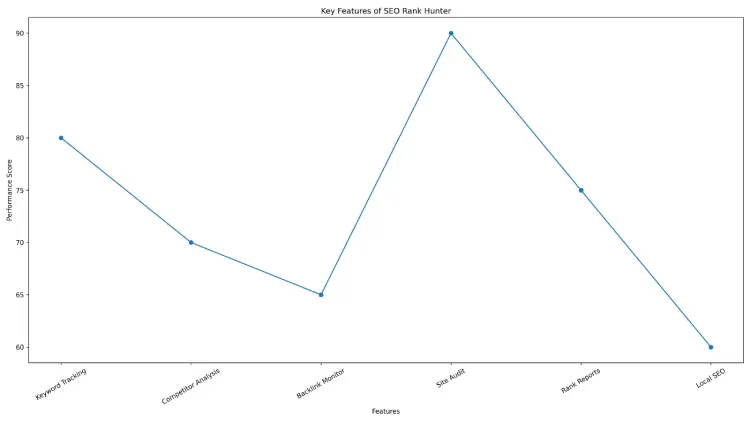
Key Features of SEO Rank Hunter
Several key points makes that SEO Rank Hunter effective in search engine optimisation.
Keyword Rank Tracking
One of the key elements of SEO practice is the monitoring of keywords.
Important metrics include:
- Current rankings
- Historical rankings
- Search volume
- Click-through rates
- Keyword difficulty
- Estimated traffic
Owners of a website can use SEO ranking tools like Google Search Console, rank tracking software, analytics software, etc., to find the SEO rankings. Leverage the opportunities before anyone else through regular monitoring.
Competitor Monitoring
Competitor monitoring enables businesses to find out about their marketplace.
Effective monitoring includes:
- Tracking ranking movements
- Comparing content quality
- Measuring backlink growth
- Evaluating keyword coverage
This information can prove valuable for businesses in the creation of more effective SEO campaigns.
SERP Analysis
Analyzing the Search Engine Results Page can give you valuable insights into how people are behaving and what’s available to offer rankings.
Modern SERPs include:
- Featured snippets
- Video results
- Local packs
- Shopping listings
- People Also Ask sections
- AI-generated summaries
These can be understood by the marketer, and then they will be able to optimize their content from there.
Website Performance Tracking
Website performance is directly and indirectly linked to a website’s ranking.
Important factors include:
- Page speed
- Mobile usability
- User engagement
- Bounce rate.
- Core Web Vitals
- Conversion performance
The goal of SEO Rank Hunter is to incorporate ranking info with site performance results to give a thorough status of how healthy a site is.
🚀 Want Results Like This for Your Business?
At TechishWeb, we also provide professional SEO services, rank tracking, keyword research, and full website optimization to help your business grow faster in search engines.
What is SEO Rank Hunter used for?
A well-structured process will maximize SEO success.
Step 1: Keyword Research
Keyword research is the first step in any successful SEO campaign.
There are four main sets of keywords referred to as types:
- Informational keywords
- Navigational keywords
- Commercial keywords
- Transactional keywords
Having the right combination to draw users at different points in the customer journey.
Step 2: Track Rankings
Continuous monitoring aids in the identification of objective trends and opportunities.
Track:
- Desktop rankings
- Mobile rankings
- Local rankings
- Global rankings
Track your ranks regularly, and your company can quickly adapt in response to algorithmic changes and competition.
Step 3: Analyze Competitors
Competitive analysis exposes the factors that are effective on the top-performing websites.
Review:
- Content structure
- Keyword targeting
- Link-building strategies
- User experience
These are insights that can frequently reveal “easy wins” and “growth opportunities” that turn out to be long-term.
Step 4: Optimize Content
Optimizing content continues to be among the leading strategies for ranking.
Focus on:
- Search intent alignment
- Content depth
- Readability
- Internal linking
- Topic coverage
- Content freshness
Google likes pages that have detailed and beneficial content.
Step 5: Monitor Results
Building a website demands SEO work, which is not done in one go.
Successful marketers continuously:
- Review rankings
- Update content
- Improve technical SEO
- Analyze competitor activity
- Expand keyword coverage
It is an active, continuing process that can keep things visible and growing.

The following are best practices for SEO Rank Hunting
You should do what works to increase the chance of you ranking well, and what doesn’t.
Create High-Quality Content
The quality of content is one of Google’s most disjointed pieces of ranking information.
Effective content should:
- Solve user problems.
- Answer common questions.
- Provide accurate information.
- Demonstrate expertise.
- Offer unique value.
With a greater prevalence of AI-generated content, originality and expertise are distinguishing factors.
Focus on Search Intent
Search intent represents the user’s concept or strategy for the search query, and gaining insight into it enables engagement with visitors who are genuinely looking for what your website has to offer.
Intent categories include:
- Informational.
- Navigational.
- Commercial.
- Transactional.
Using the right content for the user’s intent helps in engagement and rankings.
Build Quality Backlinks
It’s common knowledge that backlinking remains a vital tactic in SEO.
Good links can be generated from:
- Industry publications.
- Guest posting opportunities.
- Resource pages.
- Relevant blogs.
- Business partnerships.
Good quality is more important than quantity.
Improve Technical SEO
Technical SEO guarantees that search engines are able to successfully crawl and comprehend website content.
There are currently four major categories of SEO:
All four areas are balanced in a successful strategy.
Optimize Internal Linking
Healthy internal linking helps to provide navigation and share authority amongst key pages.
Benefits include:
- Better crawlability.
- Improved user experience.
- Increased page authority.
- Higher engagement.
The Common SEO Rank Hunter Mistakes
There are common SEO mistakes that are often committed by many websites.
Keyword Stuffing
Too many keywords result in a poor user experience and may have a negative impact on rankings.
Today, the focus in SEO is not all about keywords being used over and over again, but more about natural language and topic relevance.
Ignoring User Experience
Sometimes slower page speeds, confusing navigation, and intrusive ads can diminish engagement.
Google and other search engines have come a long way in assessing users’ experience in determining their rankings.
Neglecting Mobile Optimization
The majority of search activities are now on mobile devices. Non-quality mobile websites can fall out of search engine rankings and fail to attract any visitors.
Targeting high-volume keywords only
Many people include really competitive keywords as their first choice.
A better-focused approach is:
- Long-tail keywords.
- Low-competition opportunities.
- Niche-specific searches.
A lot of times, these sorts of terms yield better results.
Not Tracking Progress
If there is no measurement, it’s hard to improve.
SEO Rank Hunter states that the main thing it supports is a long-term growth strategy, which is accomplished by continual tracking and analysis.
Others are negative SEO practices. Several bad practices constitute negative SEO, such as spammy backlinks, content scraping, fake reviews, or any other methods that attempt to deceive another company to rank poorly. Legitimate and ethical SEO practitioners do not engage in them, but rather work on sustainable growth.
Poor SEO involves spamming with keywords, embedding a hidden message (text by the web crawler only and not the actual visitor), buying inbound links, duplicated articles or content, and creating pages that are optimized for search engines and not for consumers.
SEO Rank Hunter for Businesses
Structured SEO strategies with SEO Rank Hunter are the way to help businesses of all sizes boost visibility, traffic, and growth.
Key Benefits:
- Higher visibility: Take steps to increase your search rankings to help attract visitors.
- Better traffic quality: Attracts qualified visitors who are more inclined to convert.
- Stronger leads & conversions: Play a role in converting visitors to actual customers.
- Brand authority growth: Establishes trust and credibility in your profession.
What do you think about doing SEO by yourself?
Absolutely, anyone can learn SEO and manage SEO with time and effort.
- There are a few months that can be spent learning the basics.
- It’s going to take years of experience to master advanced SEO!
- It is only through testing and experience that real success can be obtained
Essential SEO Skills:
- Soft skills: interaction with clients and colleagues, communication, teamwork, sticky grammar, flexibility
- Soft skills: communicative and creative, with strategy elements.
Future of SEO Rank Hunter in 2026
Though SEO in 2026 is changing — with the introduction of AI and advanced search systems — it’s not yet gone. It is shifting towards more strategic, data-based, and quality-driven. AI tools can be great but won’t replace human expertise.
Key Points:
- SEO is not dead, it’s changing: Search engines place greater emphasis on expertise, trust, user satisfaction, and good content.
- AI is changing content creation: Research, writing, and analysis are enabled via AI, yet the results call for human strategy.
- Core SEO remains crucial: As always, keyword research, technical optimization, content planning, UX, and authority building are vital.
- Advanced AI integration: AI in the present day involves machine learning, deep learning, and generative systems, which affect the search way of habits.
- Future job impact: While some aspects of SEO work can be automated, others, such as strategy, creativity, and leadership, will continue to be essential.
- Future job impact: The key to success is the use of a combination of AI tools and sound human judgment.
- Best strategy for 2026: Linking AI to speed up and give insights, but having human experts to give direction and do quality control.
Conclusion
In 2026, SEO Rank Hunter acts as a vital tool for boosting search visibility, monitoring key metrics, and achieving ongoing success in your search engine marketing strategy. The collaboration of people data, rank tracking, competitor analysis, tech optimisation, and creating high-quality content can help businesses enhance their web presence and bring in valuable web traffic.
With the ongoing changes in search engines nowadays, an SEO needs to prioritize user experience, relevance, authority, and constant refinement. SEO, by no measure, has become a thing of the past, as it remains one of the greatest channels of digital marketing. From novice to expert, applying the tenets of SEO Rank Hunter can lead to more benefits like improved rankings and more traffic to the website, plus success over the long-term in the web world.
Frequently Asked Questions
1. So, SEO is still relevant in 2026, or is it considered to be dead?
In 2026, SEO continues to play a significant role. Not dead, but developing with AI, shifting focus to content quality, user experience & intent.
2. What is the best method to check SEO ranking?
On the other hand, there are SEO ranking tools such as Google Search Console, Ahrefs, and SEMrush that can be used to monitor SEO ranking by displaying keyword ranks on search results.
3. Is it hard to learn SEO when starting?
SEO isn’t too hard to begin learning, but it takes time to get great at. When practiced consistently, it can take most people a few months of practice before they understand basic concepts.
4. Do I need to hire an SEO specialist, or can I do it on my own?
Yes, you’re able to optimise your website yourself. Beginners can learn how to optimize websites and improve rankings without breaking the bank on an agency if they are dedicated, diligent, and use the appropriate tools.