


Understanding how to improve Core Web Vitals is essential for creating fast-loading, user-friendly websites that perform well in search rankings. Speed, interactivity, and visual stability can be enhanced by focusing on exercises like image optimization, reducing render-blocking resources, maintaining layout stability, improving server response, and optimizing fonts. Regular testing and combining these exercises ensure long-term performance improvements while aligning with modern SEO best practices.
1. Maximize the loading of images
How to improve Core Web Vitals starts with optimizing images, as they constitute a significant part of website load time and directly impact Largest Contentful Paint (LCP). Image optimization not only speeds up page load but also enhances overall user experience, a key factor in search rankings.
- Minimize image size: Tools like TinyPNG, ImageOptim, and Squoosh reduce file sizes without losing quality, lowering server requests, and improving LCP.
- Adopt modern formats: Converting images to WebP or AVIF ensures faster loading, as these formats are highly efficient compared to JPEG or PNG.
- Use lazy loading: Load images only when they enter the user’s viewport to reduce time to first visible content, positively affecting Core Web Vitals.
Optimizing images, combined with proper caching and streamlined code, is a simple yet highly effective way to boost website speed and performance.
2. Less Render-Blocking Resources
JavaScript and CSS are examples of render-blocking resources, which will block the first paint of your site, causing harm to First Input Delay (FID) and Largest Contentful Paint (LCP). It is necessary to do exercises aimed at decreasing or postponing these resources to enhance Core Web Vitals.
- Mark scripts that are not required at this time: Put non-critical scripts that defer or are marked with the defer or asynchronous attribute. This enables the browser to retrieve the necessary information initially, and the user can view visible content at a faster rate.
- Inline critical CSS: Above-the-fold CSS may literally be incorporated into the body of the webpage, bringing down the number of HTTP requests required to bring the responsible minimal portion of a web page into view.
- Eliminate unutilized CSS and JavaScript: CSS tools such as PurgeCSS can be used to find the code that is not in use on your pages. Removing the unused files decreases the average page weight, therefore enhancing speed and responsiveness.
Such workouts aid websites work more effectively, which produces greater SEO ratings and improved user experience. Actually, research indicates that sites whose render paths have been optimized tend to be ranked higher in search engines because of high Core Web Vitals scores.
3. Enhance Response Time on the Server
A slow server may damage all metrics of Core Web Vitals, such as LCP, FID, and Cumulative Layout Shift (CLS). Speeding up the server is one of the most important exercises of optimizing the speed and user experience of the sites.
- Select a good hosting company: A hosting company that is capable of dealing with a large amount of traffic will make sure that your site will not become unresponsive at any time of the day. Quick servers decrease the time lag in delivering content, and this directly favors Core Web Vitals.
- Server-side caching: This is implemented to hold the static resource in the server and minimizes the time taken to access content repeatedly. It is an important exercise used when visiting the same pages repeatedly and on pages that contain much media content.
- Optimize database queries: Database queries should be streamlined so as to make data retrieval fast and efficient. Use of unnecessary joins or complex queries can be avoided, thus decreasing the strain on the server and enhancing Page load time.
Along with the speed improvements, there is also the level of server optimization, which has increased the SEO score. The experts regard a 75 score on PageSpeed Insights as good, yet the exercises mentioned above can help increase the score towards 100, which is perfect to achieve maximum efficiency in terms of SEO.
4. Layout Stabilization to Minimize CLS
The problem of unexpected changes in layout annoys users and has a detrimental impact on Cumulative Layout Shift (CLS).
- The following exercises are beneficial in keeping a website stable in its appearance:
- Establish the image and video sizes: All media elements should have width and height explicitly defined in order to avoid the layout changes without any prior notice.
- Create space to add advertisements and embeds: It is always important to reserve space to be filled out and show dynamic content, lest the new contents appear and leave the earlier ones accidentally pushed down by the new ones.
- Do not use dynamic content in the above position: To provide a consistent visual experience, add new scripts or interactive components below the fold.
The fact that stable layouts improve user experience is also indicative of the fact that the layouts follow the modern SEO principles, since such websites are ranked highly by search engines due to the ease of content navigation.

5. Just Fonts Fast Display Optimization
Text rendering 3 is blocked by custom fonts and large-scale chromogenic processing LCP. The optimization of fonts is a very demanding exercise:
- Font-display swap: This enables the web browser to use a fallback font until the custom font is loaded, thereby giving the browser the appearance of loading at a faster pace.
- Minimize font variants: looking to cut down on resource loading by minimizing the variants of a font.
- Load the most important font: It is recommended to load critical fonts to be sure that the first content that is visible loads fast.
Due to the proper optimization of fonts, the Core Web Vitals improve not only but also lead to better SEO through the increase in user engagement indicators. The search engines that are used nowadays give a reward to those websites that have quick, readable, and attractive content.
6. Monitor and Test Regularly
Core Web Vitals is not fixed continuous monitoring and testing are needed to maintain a high level of performance.
The following exercises make optimizations effective in the long-term:
- Make use of PageSpeed Insights and Lighthouse audits: These tools are used to give in-depth metrics and positive advice towards CTB.
- Improvements in tracking: Keep a performance log, comparing scores before every exercise and after every exercise.
- Use incremental modifications: Scripts, pictures, and server configuration must be constantly changed in response to the audit results so that demand is optimized to the best.
The frequent testing is also useful in detecting opportunities for SEO. Websites that have a consistently high performance rate would be ranked higher. Achieving the objective of 100% SEO score may not be that easy, but with constant monitoring and improvement activities, this can be achieved.
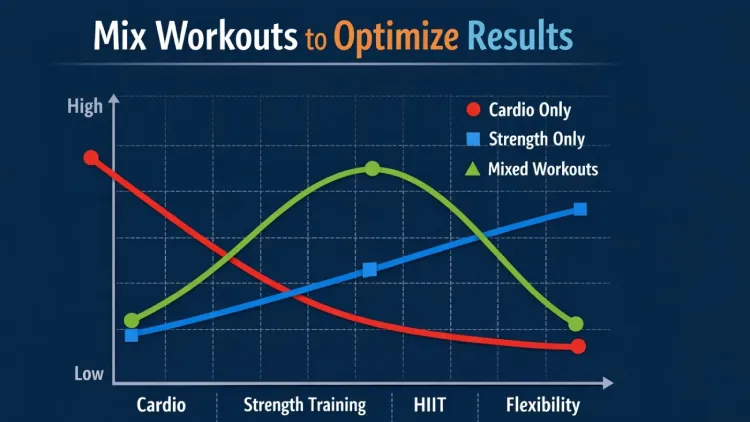
7. Mix Workouts to Optimize Results
Combining several exercises is the most effective approach to the improvement of Core Web Vitals instead of dealing with all of them separately. You can not guarantee that by only focusing on a single metric, you would achieve the best outcomes, whereas a holistic approach will help to make sure that there is not a single factor on the way to the top of any kind (whether this is a site or another feature).
Load some images and compress them at the same time
A smaller size of images only enhances a faster page load; when combined with lazy loading, it only loads the images that are in view. Such a method not only decreases Largest Contentful Paint (LCP) but also the initial server load, which quickly renders the page. As an example, when an e-commerce site contains hundreds of product images, interplaying with these practices can be what develops a smooth shopping experience and a slow-loading page.
Preload fonts by minimizing render-blocking resources
Most websites load personal fonts and large JavaScript files, which might slow down the first meaningful paint. Reducing the loading of non-essential scripts and preloading vital fonts at the same time enhances First Input Delay (FID) and LCP. This makes sure that the users can interactively see readable content nearly instantly, and interactive aspects follow well without delays.
Combining these exercises makes layout shifts due to late-loading fonts unlikely hence, Cumulative Layout Shift (CLS) is also enhanced.
Clean up CSS and JavaScript, optimize server response.
Every single Core Web Vitals is directly influenced by the performance of servers. As a combination of both server-side optimization, such as caching, optimization of database queries, and hosting upgrades, and a complete cleanup of CSS and JavaScript files, it’s going to guarantee that the performance of both the backend and the frontend is properly maximized. It is an effective technique, especially with dynamic websites where database queries and front-end scripts can be long and slow, like in blogs or even at news portals.
Use of combined exercises in the interpage
Although optimisation of a single page could enhance the overall performance of the site as far as the utilisation of Core Web Vitals is concerned, the implementation of these merged exercises globally would guarantee the uniform functionality. An example would be compressing and lazy loading pictures, deferring scripts, and server response optimization of all major landing pages, which will result in a seamless, faster user experience more likely to favor search engines.
SEO and customer experience synergy
Exercise combinations not only enhance the Core Web Vitals, but your search engine optimization strategy as well. A web page with faster, more stable, and interactive results is translated into improved engagement measurements, reduced bounce rate,s and greater dwell time,e which search engines glean as quality indicators. Since 2026, SEO has become more technical and performance-oriented, with the relevance of the content, and these exercises are paramount to being ranked high.
Ready to take your website performance to the next level?
At TechishWeb, we specialize in Core Web Vitals optimization, speed improvements, and advanced SEO strategies that deliver real results.
👉 Contact us today and let’s boost your rankings and user experience.
There are long-term advantages of a combined strategy.
Various optimization exercises must be applied jointly regularly, as the maintenance in the future becomes easier. Compression, lazy loading, font preloading, and resource cleanup have a uniform process that is cost-effective to ensure that Core Web Vitals are maintained at a high level without the need to continuously perform troubleshooting as you add new content, images, or scripts. This is also a proactive strategy to avoid instances of common SEO errors, including slow page load, changes in layout, and sluggish interactivity, which is becoming punishable not only by the search engines.
When you resort to all these actions, you can come up with a website that is technically optimized in addition to being friendly to the end user, visually stable, and ready to meet any modern-day SEO requirements. The holistic approach will make sure that every page works to the maximum so that a base of long-term success in search ranks and user interaction is established.
Combining SEO and Core Web Vitals
Enhancement of Core Web Vitals is closely connected with the successful practice of SEO. Speed and layout optimization, as well as the optimization of page interactivity, make sure that your webpage is technically correct, which is a supplement to the content and link-building strategies.
- Optimization of the content is important: The adherence to the 5 Cs of content, i.e., clarity, conciseness, consistency, creativity, and credibility, improves engagement rates, in addition to the improvement of Core Web Vitals.
- Technical elements of SEO: Server speed, structured data, mobile-friendliness, and safe connections have an impact on search ranking. These pillars are enhanced by the exercises of Core Web Vitals.
- Digital marketing synergy: The overall performance and visibility can be supported through the integration of exercises in Core Web Vitals with additional strategies such as social media, email marketing, and PPC marketing.
Even the current AI systems, such as ChatGPT, are capable of supporting SEO work, content creation, and auditing. Although AI will not fully eliminate the need to optimize solutions through hands-on exercises, it can be used to supplement these activities by delivering insights, automating routine tasks, and recovering performance measures.
Familiarization with SEO Situation
In the exercises above, one should have insisted on technical optimization, but it is essential to comprehend the bigger picture of the SEO environment:
- SEO is not over: In 2026, search engines focus on user experience, relevance, and technical performance. These priorities are appropriate to Core Web Vitals exercises.
- Core Web Vitals improve all of the four pillars of SEO: Technical SEO, on-page optimization, off-page strategies, and the user experience.
- Razin errors to prevent: Scripts can be overloaded, mobile performance should be taken into account, and layout stability is one of those mistakes that are corrected by the exercises given above.
- AI and SEO: AI could be useful in keyword studies, audits, and content, but human involvement is still necessary to achieve fine-tuning and planning.
SEO is one of the IT-related skills that are still highly valued and have a variety of career options, such as technical optimization, content strategy, and performance analysis. Learning about Core Web Vitals also belongs to the knowledge of contemporary SEO practices.

Conclusion
By performing specific exercises in a bid to optimize Core Web Vitals, a certain foundation has been laid on the way that website performance, user experience, and search engine rankings are going to be improved. The emphasis on image optimization, decreasing resource usage on render blocking, server optimization, layout, and font optimization, and frequent check-ups will guarantee quantifiable and long-term outcomes.
Combining these exercises with larger SEO activities, including both technical optimization and content strategy, puts your website into the position of being long-term successful. In 2026, Core Web Vitals may not be a luxury but a necessity to remain viable in the digital world.
With regular use of these exercises, you would have the capacity to create quick, consistent, and interactive websites that not only appeal to customers but also those sites that rank remarkably higher in the search engines.
Frequently Asked Questions
FAQ 1: What can I do to immediately make my website get better Core Web Vitals?
To have the fastest way to enhance Core Web Vitals, concentrate on picture compression, reduce render-blocking, and minimize server response, as well as overlaying structures. These practices enhance LCP, FID, and CLS to make pages quicker and easier.
FAQ 2: Will Core Web Vitals matter in 2026?
Yes, the core Web Vitals are necessary when it comes to SEO in 2026. The focus of search engines is on user experience, speed, and stability. Websites that have high LCP, FID, and CLS scores have a higher ranking and better engagement measures.
FAQ 3: Do fonts and image optimization have the ability to affect Core Web Vitals?
Absolutely. Optimized images have faster loading times, which increases the LCP, font preloading, and font-display: swap minimizes the time taken to render a text, which increases FID. The two exercises are progressive towards quicker, more dependable, and search engine-friendly pages.
FAQ 4: What is the frequency of monitoring and testing? How to improve Core Web Vitals?
The usage of such tools as PageSpeed Insights or Lighthouse is expected to monitor the core Web Vitals on a regular basis. Frequent testing aids in the detection of problems early, tracing the progress, and improving the efficiency of optimizations as your site develops.