

SEO mobile optimization means improving rankings, traffic, and conversions by making your website fast, responsive, and easy to use on mobile devices. With mobile-first indexing, your mobile site directly impacts your SEO success. By optimizing speed, usability, and content, and using free tools and AI platforms like ChatGPT, even beginners can increase visibility and grow their online revenue.
What is SEO mobile optimization?
SEO mobile optimization means ensuring that your website performs optimally on smartphones and tablets and ranks well in search engines.
Designed for mobile-first indexing.
Search engines prefer the mobile version of your site. SEO mobile optimization ensures that your content, structure, and performance meet these requirements for better rankings.
Accessible on all devices
When users browse on Android, iOS, or tablets, your site should load quickly and display correctly without disrupting the layout or functionality.
SEO and UX integration
It combines technical SEO, design, and user experience to create a seamless journey for visitors on mobile devices.
This is also possible on a smartphone
By accessing analytics tools, editing content, and optimizing images, you can optimize mobile SEO using your phone without the need for a desktop computer.
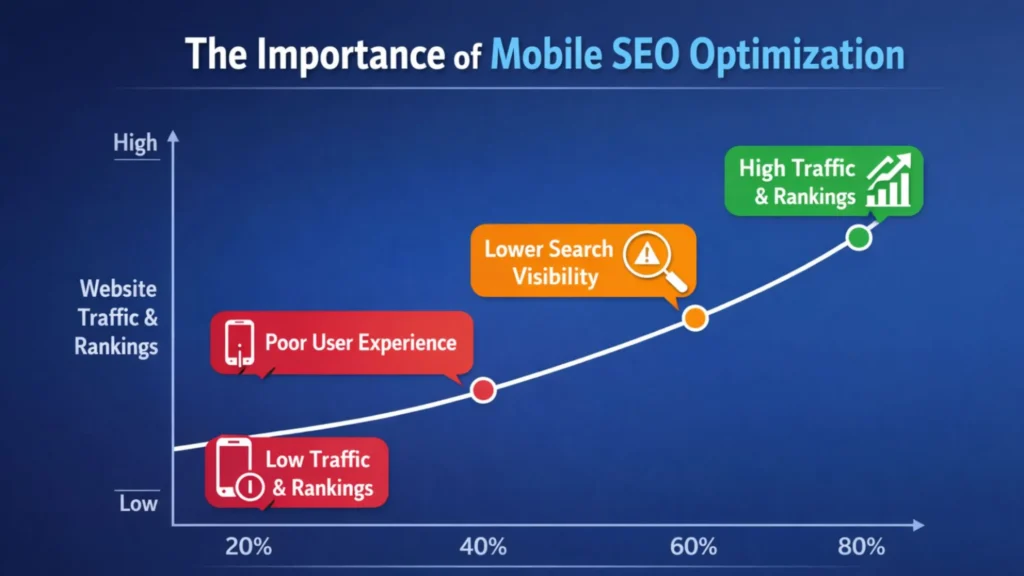
The Importance of Mobile SEO Optimization
Since mobile usage dominates the internet, mobile SEO optimization is essential for online success.
The majority of users are mobile-first.
Most users browse websites via mobile devices. Ignoring mobile SEO optimization means losing a large portion of your audience.
Higher rankings in search engines
Google rewards mobile-friendly websites, making mobile SEO optimization a direct ranking factor.
Increases conversions and revenue.
A fast and user-friendly mobile experience builds trust, leading to more conversions and better revenue.
Supports app and business growth.
A mobile SEO strategy can help drive traffic to mobile apps, increase downloads, and increase engagement.
Key Elements of Mobile SEO Optimization
To master mobile SEO optimization, focus on the following key components.
1. Responsive Web Design
Automatically adjusts the layout.
Responsive design improves readability and usability by ensuring that your website adapts to all screen sizes
Improves user experience.
- Visitors can easily navigate your website without having to zoom or scroll.
- Recommended Best Practices
- Google recommends responsive design for effective SEO mobile optimization.
2. Mobile Page Speed Optimization
Fast loading speeds improve rankings.
- Speed is a key ranking factor. SEO mobile optimization requires pages to load within 2-3 seconds.
- Key Web Metrics Matter
- Metrics like LCP, CLS, and INP directly impact performance and SEO success.
- Light on resources
- Compress images, reduce scripting, and use caching to improve mobile speed.
3. Mobile-friendly content
Concise and scannable content
- Mobile users prefer short paragraphs, bullet points, and easy-to-read formatting.
- Readable fonts and spacing
- Appropriate typography allows users to read content comfortably without having to zoom in.
- Voice search optimization
- As more users rely on voice assistants, content should include natural language queries.
4. Optimized navigation
Simple menus increase usability.
- Clean navigation helps users find information quickly, increasing engagement.
- Clickable elements are important.
- Buttons should be large and well-placed for mobile interaction.
- Reduces bounce rate.
- Easy navigation encourages users to stay on your site longer.
5. Mobile Technical SEO
Consistent Mobile and Desktop Content
- Ensure that both versions have the same important content for better indexing.
- Implementing structured data
- Helps search engines understand your content and show rich results. Bug Tracking Tools
- Use tools like Google Search Console to identify and resolve issues.
Ready to Boost Your Mobile SEO Performance?
At TechishWeb, we don’t just guide you—we deliver results. From responsive design to lightning-fast page speed and technical SEO, our experts handle everything to help your website rank higher and convert better.
Best Practices for Mobile SEO Optimization
Implementing proven strategies guarantees long-term success in mobile SEO optimization.
Use responsive frames.
Frames simplify design and ensure cross-device compatibility.
Optimize images and media
Use modern formats and lazy loading to reduce loading time.
Focus on user intent.
Create content that effectively and clearly answers user questions.
Minimize pop-ups and ads.
Intrusive elements can negatively impact mobile experience and rankings.
Leverage AI tools for SEO.
Tools like ChatGPT can help with keyword research, content creation, and SEO audits.

Common Mobile SEO Mistakes to Avoid
Avoiding common mistakes is essential to maintaining strong mobile SEO optimization performance and ensuring that your website offers a seamless experience across devices. Even small mistakes can negatively impact rankings, traffic, and user engagement, so it’s important to identify and fix them quickly.
Ignoring Mobile-First Indexing
Many website owners still prefer desktop designs while ignoring mobile performance. Since Google primarily uses mobile-first indexing, this approach can have a significant negative impact on rankings. Make sure your mobile version is fully optimized, complete, and compatible with your desktop content.
Slow Loading Pages
Page speed is a key ranking factor in SEO mobile optimization. Heavy images, poorly optimized code, and excessive scripting can slow down your site. Users expect pages to load quickly, and even a few seconds of delay can increase bounce rates and reduce conversions.
Poor mobile design
A non-responsive or poorly structured design is frustrating for mobile users. Small text, overlapping elements, and difficult navigation can turn visitors away. A clean, responsive design provides better usability and keeps users engaged longer. Blocking critical resources
Preventing search engines from accessing CSS, JavaScript, or images makes it difficult for them to understand your site. This can lead to indexing issues and lower rankings. Always allow your website resources to be crawled and processed properly.
Intrusive pop-ups and interstitial ads
Pop-ups that overlay main content can create a poor user experience on mobile devices. Search engines may penalize sites that use aggressive, intrusive ads, especially when they block access to important content.
Large, uncompressed image sizes slow down mobile performance. Always use optimized formats like WebP and implement lazy loading to increase speed without sacrificing quality.
Poor navigation structure
Complicated menus and hard-to-click links make it difficult for users to explore your site. Easy navigation with clear menus and well-placed buttons improves usability and SEO performance.
Inconsistent content between mobile and desktop
Missing or reduced content in the mobile version can negatively impact rankings. Make sure your mobile site has the same valuable content, structured data, and metadata as your desktop version.
Neglecting local SEO for mobile users
Mobile users often search for local services. Neglecting local SEO elements like location keywords, Google Business Profiles, and maps can limit your visibility in local search results.
Not Testing Regularly
Failure to monitor your website’s mobile performance can lead to problems that go unnoticed. Regularly check and improve your mobile SEO optimization using tools like Google Search Console and Google PageSpeed Insights.
By avoiding these mistakes and constantly refining your strategy, you can strengthen your mobile SEO performance, improve user experience, and achieve better rankings in search engines.
Mobile SEO Optimization Tools
These tools are crucial for improving mobile SEO optimization.
The Google Mobile-Friendly Test
tests how easily users can navigate your site on mobile devices.
Google PageSpeed Insights
provides speed analysis and optimization recommendations.
Google Search Console
helps monitor mobile usage and search performance.
GTMetrics
provides advanced insights into loading performance.
Advanced Insights: SEO, AI, and Mobile Growth
Mobile SEO optimization is rapidly evolving with AI and changing user behavior.
SEO is evolving, it’s not dead
SEO continues to evolve with new technologies like AI, voice search, and semantic search.
AI is improving SEO strategies
Tools like ChatGPT can do keyword research, create content, and even help with SEO audits.
You can do SEO without investing
Free tools and organic strategies allow beginners to succeed without spending a dime. SEO job opportunities are on the rise.
SEO professionals earn competitive salaries globally, making it a rewarding career path.
Mobile Apps, SEO, and Monetization
Mobile optimization plays a critical role in app growth and monetization. By combining SEO mobile optimization with smart app strategies, you can increase visibility, downloads, and overall revenue.
SEO increases app downloads
SEO mobile optimization helps drive organic traffic to your app pages and content. Higher rankings on Google mean more visibility and downloads without relying on paid advertising.
Strategies for Reaching 1000 Downloads
Use App Store Optimization (ASO), social media promotion, and SEO mobile optimization to attract targeted users. Consistent content and specific targeting can help you reach your first milestones faster.
Monetization from Mobile Platforms
Apps generate revenue through ads, subscriptions, and in-app purchases. A steady stream of traffic through SEO mobile optimization increases your monetization potential over time.
High-Ranking App Models
Gaming, finance, and utility apps often perform best because they provide strong value and engagement, leading to higher monetization.
Daily Monetization Strategies
Combining SEO mobile optimization, content marketing, and user engagement can help you generate consistent daily revenue from mobile platforms.
Essential SEO concepts you need to know
Understanding the fundamentals of SEO strengthens your mobile optimization strategy.
Two main types of SEO:
On-page SEO (content, keywords) and off-page SEO (backlinks, authority).
Four types of SEO:
Technical SEO, on-page SEO, off-page SEO, and local SEO.
Four foundations of SEO:
Content, technical performance, backlinks, and user experience.
Five key concepts:
Keywords, content quality, backlinks, technical optimization, and user intent.
The Three Cs of SEO:
Content, Code, and Reliability.
The Golden Triangle of SEO:
Visibility, Relevance, and Authority.
The Future of Mobile SEO Optimization
The future of mobile SEO optimization is being shaped by advances in technology and changing user behavior. To stay competitive, businesses need to adapt to new trends and focus on delivering better mobile experiences.
The Rise of AI and Automation:
AI tools like ChatGPT are helping with content creation, keyword research, and SEO audits. However, human creativity and strategy are still important. The Expansion of Voice and Visual Search
Consumers are increasingly using voice search and visuals to find information. Optimization for natural language and visual content is becoming increasingly important.
5G and Faster Browsing
Faster internet speeds mean that consumers can expect faster loading and smoother performance on mobile devices.
SEO in 2030
SEO will focus more on Google’s improved algorithms, user intent, and personalization.
Jobs that will continue despite AI.
Creative and strategic roles like SEO and digital marketing will continue to grow.
Types of AI impacting SEO
Key technologies include machine learning, natural language processing, and deep learning.
SEO is evolving, not dead.
As long as search engines and users rely on mobile experiences, SEO mobile optimization will continue to grow.

Final Thoughts
SEO mobile optimization is a powerful strategy that combines technical expertise, user experience, and content quality to achieve success in the digital world. Whether you’re a beginner or an expert, focusing on mobile optimization can significantly increase your rankings, traffic, and revenue.
By implementing best practices, leveraging AI tools like ChatGPT, and following trends, you can stay ahead of the competition. SEO is constantly evolving, and those who adapt will continue to thrive and succeed.
Start implementing SEO mobile optimization today to unlock new opportunities, increase visibility, and build a strong online presence in the mobile-first era.
Frequently Asked Questions
1. Can I do SEO mobile optimization using just my phone?
Yes, you can do SEO mobile optimization using your smartphone. Tools like Google Search Console and ChatGPT allow you to analyze performance, create content, and optimize pages directly from your mobile device.
2. Why is mobile SEO optimization important for rankings?
Mobile SEO optimization is important because search engines like Google use mobile-first indexing. This means that your mobile site determines your rankings, traffic, and overall visibility.
3. Can I do SEO without paying?
Yes, mobile SEO optimization can be done without investment using free tools, organic content strategies, and consistent optimization. While paid tools can speed up results, they are not necessary for success.
4. Is SEO still worth it in the future?
Absolutely. Mobile SEO optimization is evolving with AI, voice search, and user intent. It is one of the most effective long-term strategies for generating organic traffic and online revenue.