
Content marketing is about storytelling that engages, educates, and builds trust with your audience. Instead of traditional ads, great content connects and drives sales. For example, G.I. Joe comics (1982) gave toys backstories, boosting ownership rapidly—showing how storytelling can create lasting engagement and loyalty.
What Is SEO Content Marketing?
SEO Content marketing is a strategy that focuses on creating valuable content to attract, engage, and retain an audience. Unlike traditional advertising, it builds trust and authority rather than directly selling products. This can include blogs, videos, infographics, podcasts, and interactive tools.
By providing helpful content throughout the customer journey—from awareness to purchase—businesses can increase traffic, generate leads, and foster long-term loyalty. Staying current with trends like short-form videos, AI tools, and personalised content helps maintain a competitive edge.
In essence, SEO content marketing is about consistently delivering value, turning audiences into loyal customers over time.
Should You Use SEO Content Marketing?
Now that we’ve explored what seo content marketing and SEO are, a common question arises: “Which one should I use — seo content marketing or SEO?” The answer is not one over the other—it’s both.
These two strategies are highly complementary and work best when used together. Neither of them can become whatever they are capable of becoming alone. For instance:
- SEO without content: Search engines rely on high-quality content to understand what your website offers. Without informative content such as blog posts, guides, or articles, there’s nothing to optimise. Even if your website has great technical SEO, it will struggle to rank because search engines have no value to deliver to users.
- Content marketing without SEO: Creating great content alone is not enough. Without SEO, your audience may never find your content in search engines. No matter how informative or engaging your articles or videos are, their impact is limited if they don’t reach the right people.
Why Using Both Together Works Best
Combining seo content marketing creates a powerful synergy:
- SEO drives visibility: By optimising your content with relevant keywords, meta descriptions, headings, and internal links, your content becomes easier for search engines to find and rank.
- Content engages and converts: High-quality, informative content captures audience attention, builds trust, and encourages users to take action, such as subscribing, contacting you, or making a purchase.
- Long-term results: While paid ads provide immediate results, combining content and SEO builds a sustainable source of organic traffic over time. This long-term approach is more cost-effective and strengthens your authority in your industry.
- Improved user experience: SEO ensures your site is fast, mobile-friendly, and easy to navigate, while content marketing ensures users find meaningful information that solves their problems. Together, they create a seamless experience for visitors.
Best Practices for Combining SEO Content Marketing
To get the most out of both strategies:
- Conduct keyword research: Identify the terms your audience is searching for and create content around them.
- Create high-quality content: Focus on solving problems, answering questions, and providing value.
- Optimise content for SEO: Include keywords naturally, write compelling meta titles and descriptions, and use internal and external links.
- Promote your content: Share content on social media, email newsletters, and other channels to increase visibility and engagement.
- Monitor and refine: Use analytics to track performance, understand what works, and improve future content.
Want expert help combining SEO content marketing with SEO? At TechishWeb, we create high-quality, SEO-optimised content that drives traffic and results. [Get Started Today.
How is SEO Content Marketing SEO Connected?
SEO and content marketing are two distinct strategies, but they work best together. SEO Content marketing creates valuable content—like blogs, videos, and infographics—while SEO ensures that content is discoverable in search results.
Using SEO content marketing alone means your content may go unnoticed. Using SEO alone means there’s nothing to optimise. Together, content is the “bait” that attracts users, and SEO is the “fishing line” that brings it in front of the right audience. Combined, they drive traffic, engagement, and conversions.
How to Use SEO Content Marketing Together
SEO and content marketing are most effective when used together, rather than separately. Integrating both strategies ensures that your content reaches the right audience, ranks well in search engines, and drives meaningful traffic and conversions. Below are detailed steps on how to connect content marketing with SEO.
1. Create Content Based on Search Results
When planning content, one of the best sources of ideas is search results themselves. Your ultimate goal is for your content to appear in search engine results pages (SERPs), so it makes sense to start by understanding what your audience is already searching for.
- Keyword Research: Begin by identifying keywords and phrases that your target audience uses. These can be broad terms or long-tail keywords that indicate specific search intent.
- Analyse Competitors: Look at the content currently ranking for your target keywords. Note what questions are being answered and which gaps you could fill with your content.
- Content Planning: Use the insights from your research to develop content that aligns with user intent. For example, if you run a manufacturing company and see high search volume for “what do manufacturing companies do,” you can create a detailed blog post answering that query.
- Use Content Tools: Platforms like SEMrush, Ahrefs, and Google Trends can help analyse search trends, track keyword performance, and suggest content opportunities based on what your audience is actively searching for.
By creating content rooted in actual search behaviour, you ensure that your content has a better chance of ranking and attracting qualified traffic.
2. Implement SEO Best Practices While Creating Content
To maximise the impact of your content, it’s important to integrate SEO best practices during the content creation process, rather than trying to optimise it afterwards.
- Keyword Integration: Naturally include your target keywords in the title, headings, body, meta descriptions, and URLs. Avoid keyword stuffing; focus on readability and relevance.
- Competitive Analysis: When outlining your content, review top-ranking pages for your keyword. Identify the questions they answer and ensure your content provides equal or greater value.
- Content Structure: Use headings, bullet points, short paragraphs, and visuals to make content more readable and easier for search engines to crawl.
- Internal Linking: Include links to other relevant pages on your website to help search engines understand your site structure and improve user navigation.
- Multimedia Integration: Adding images, videos, infographics, and charts can enhance engagement and improve your chances of ranking in SERP features like featured snippets.
Creating content with SEO in mind from the start saves time, ensures better optimisation, and increases the likelihood of your pages ranking higher in search results.
3. Update Old Content With SEO Tactics
Content marketing doesn’t stop once a page is published. Over time, content can become outdated or less effective. Updating old content with SEO tactics keeps it relevant and improves its performance in search results.
- Refresh Keywords: Update content with new keywords that reflect current search trends or industry terminology.
- Add New Information: Include updated statistics, insights, or examples to keep the content relevant and authoritative.
- Improve Readability and Structure: Enhance headings, subheadings, bullet points, and formatting for a better user experience.
- Optimize Meta Data: Refresh meta titles and descriptions to improve click-through rates from search engines.
- Add Links: Include new internal and external links to strengthen SEO and provide additional value to readers.
By periodically revisiting and optimising older content, you extend its lifespan, maintain traffic, and improve your overall SEO performance.
A Predictable Content Framework
SEOClarity’s framework combines SEO, content marketing, and AI to help teams create high-quality content that ranks, stays relevant, and drives traffic over time. It ensures predictable performance, maximises ROI, and keeps your content investment working long after publication.
The Power of Content Marketing in Digital Marketing
Content marketing is a key part of any successful digital strategy. By creating and sharing valuable, relevant, and consistent content, businesses can improve search rankings, drive organic traffic, and establish trust with their audience.
It helps engage and educate prospects, guide them through the buyer’s journey, and generate qualified leads that convert into loyal customers. At Techishweb, our team of writers, strategists, and marketers delivers expert content marketing services to boost your online presence and drive measurable results.
Techishweb Data-Driven Approach to Content Marketing
At Techishweb, we believe that effective content marketing is driven by data and aligned with your audience’s journey. Creating content without considering the buyer’s path is inefficient; not all content serves the same purpose. That’s why our funnel-driven content creation process ensures that your brand delivers the right message to the right audience at the right time, maximising engagement, authority, and conversions.
Funnel-Driven Content Creation for Maximum Impact
Our approach is structured around the marketing funnel, targeting potential customers at every stage of their journey:
1. Top of the Funnel (TOF) Content
Potential customers just learn about your brand in the awareness stage. Our goal is to attract and engage your audience, helping them identify their needs and introducing your business as a trustworthy source.
- Types of TOF Content: Blog posts, social media content, infographics, videos, and educational guides.
- Purpose: Address audience pain points, spark curiosity, and build brand awareness.
- Example: A blog post addressing “common challenges in your industry” to attract new prospects.
2. Middle of the Funnel (MOF) Content
At the consideration stage, prospects are evaluating solutions and comparing options. Our content educates and informs, positioning your brand as an authority and helping prospects make informed decisions.
- Types of MOF Content: Whitepapers, case studies, webinars, eBooks, and in-depth guides.
- Purpose: Demonstrate expertise, provide actionable insights, and nurture prospects toward a purchase decision.
- Example: A case study showing how your solution solved a real customer problem.
3. Bottom of the Funnel (BOF) Content
At the decision stage, prospects are ready to take action. Our content focuses on conversion, highlighting your unique value proposition and persuading potential customers to choose your products or services.
- Types of BOF Content: Product demos, testimonials, comparison guides, pricing pages, and free trials.
- Purpose: Build trust, reduce friction, and encourage conversions.
- Example: A video demo showcasing the benefits of your software over competitors.
4. Re-engagement Content
Content marketing doesn’t end at the sale. Retaining and nurturing existing customers is critical for long-term growth and repeat business. Our re-engagement content keeps your audience connected and encourages ongoing loyalty.
- Types of Re-engagement Content: Email newsletters, loyalty program updates, personalised recommendations, and exclusive offers.
- Purpose: Maintain engagement, strengthen customer relationships, and drive repeat purchases.
- Example: A newsletter highlighting new features or personalised product suggestions for past customers.
Why Techishweb’s Funnel-Driven Approach Works
By mapping content to the marketing funnel, Techishweb ensures that every piece of content:
- Addresses the specific needs of your audience at each stage.
- Enhances your brand authority and trustworthiness.
- Drives measurable traffic, engagement, and conversions.
- Supports long-term customer retention through re-engagement strategies.
Our data-driven approach, combined with expert strategists, writers, and marketers, allows your business to maximise the ROI of your content marketing efforts while delivering meaningful experiences to your audience.
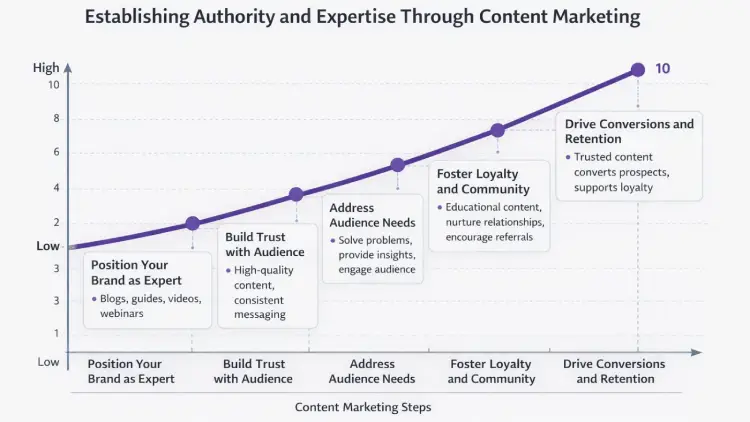
Establishing Authority and Expertise Through Content Marketing
Content marketing helps your brand stand out in a crowded digital landscape by providing valuable, informative, and engaging content. Here’s how it builds authority and expertise:
- Position Your Brand as an Expert: Consistently creating blogs, guides, videos, and webinars shows your knowledge and establishes credibility.
- Build Trust with Your Audience: High-quality content fosters confidence in your brand, making prospects more likely to choose your products or services.
- Address Audience Needs: Content that solves problems and provides insights engages your audience and keeps them coming back.
- Foster Loyalty and Community: Educational and helpful content nurtures lasting relationships and encourages word-of-mouth referrals.
- Drive Conversions and Retention: Trusted, authoritative content not only converts prospects but also supports long-term customer loyalty.
By combining these strategies, content marketing helps your brand earn trust, establish authority, and grow a loyal audience.
Amplify Your Content’s Reach Strategic Promotion and Distribution
Creating high-quality content is only the first step in a successful content marketing strategy. To maximise its impact, your content needs to reach the right audience. Strategic promotion and distribution help ensure your content gets visibility, engagement, and drives results.
Effective ways to amplify your content include:
- Search Engine Optimisation (SEO): Optimise your content with relevant keywords, meta titles, headings, and internal links to improve visibility in search engine results and attract organic traffic.
- Social Media Promotion: Share content across platforms like Facebook, LinkedIn, Instagram, and Twitter to engage your followers, encourage sharing, and reach new audiences.
- Email Marketing: Send newsletters and personalised updates to nurture leads, maintain engagement, and drive traffic back to your website.
- Influencer Outreach: Collaborate with industry influencers to expand your reach, increase credibility, and gain access to niche audiences.
- Paid Promotion: Use social media ads, native advertising, or PPC campaigns to boost content visibility, target specific audiences, and achieve faster results.
By combining these strategies, you can maximise your content’s reach, engage your target audience more effectively, and turn your content into a powerful tool for generating traffic, leads, and conversions.
The Fatal Flaws of Traditional Advertising
Traditional advertising, such as billboards, magazine ads, TV commercials, and radio spots, has been a cornerstone of marketing for decades. However, despite its long history, it comes with inherent limitations and flaws that reduce its effectiveness in today’s fast-paced, digitally driven world.
1. Interruptive Nature
One of the biggest problems with traditional advertising is that it is interruptive by design. Unlike modern inbound strategies that attract consumers with valuable content, traditional ads force their message onto audiences, often at inconvenient times:
- Billboards: Drivers are expected to glance at a large sign while focusing on the road, relying on brief attention spans to deliver the message.
- TV and Radio Commercials: Viewers or listeners are interrupted while enjoying a show or program. The ad competes for attention amidst entertainment or programming that the audience is genuinely interested in.
- Magazine and Print Ads: Readers encounter advertisements while reading articles or features, with no prior interest in the ad itself.
Because these ads are not requested or anticipated, they are often ignored, skipped, or tuned out, limiting their impact.
2. Lack of Value to the Audience
Traditional ads rarely provide intrinsic value to the customer. They often focus on promoting a product or service rather than offering useful information, entertainment, or solutions to problems.
- Viewers and readers have no compelling reason to engage with these ads beyond mere exposure.
- The messaging is one-way: companies broadcast their content without creating meaningful interaction or dialogue.
- Without providing value, ads are more likely to be forgotten quickly, reducing brand recall and engagement.
3. Forced Attention and Limited Engagement
Many traditional ads rely on circumstances where the audience cannot easily escape the advertisement:
- Subway ads capitalise on the fact that passengers are waiting in confined spaces and may glance at posters out of boredom.
- Billboards and highway signage assume drivers will notice the message during travel, often competing with visual distractions and safety concerns.
Even in these captive situations, attention is passive, not active. People may glance at an ad but rarely interact with it, seek more information, or act on it immediately. This limits measurable engagement and ROI for businesses.
4. One-Size-Fits-All Approach
Traditional advertising generally targets broad demographics rather than individual preferences or behaviours. A single ad in a magazine, on a billboard, or during a TV commercial slot is seen by millions, but only a small fraction may have any genuine interest in the product or service.
- This results in wasted impressions, as resources are spent reaching uninterested audiences.
- Brands have little ability to personalise or tailor messaging based on the audience’s needs, interests, or stage in the buying journey.
The Advantages of Content Marketing Over Traditional Advertising
Content marketing offers many benefits that traditional advertising cannot:
- Provides Value: Engages customers with useful, relevant content rather than interrupting them.
- Educates Customers: Helps prospects understand your products and become purchase-ready.
- Builds Trust and Reciprocity: Free content encourages loyalty and future purchases.
- Attracts Organic Traffic: Content continues to drive visitors long after publishing.
- Encourages Sharing: Content is shared repeatedly, expanding reach.
- Boosts SEO: More pages indexed improve search visibility.
- Targets the Right Audience: Content reaches those most likely to convert.
Content marketing builds trust, drives traffic, and delivers long-term results, making it far more effective than traditional ads.
How to Get More Out of Your Content Marketing Efforts
To maximise your content marketing results, focus on creating value and engaging your audience:
- Provide content your customers want: Solve problems, educate, or entertain instead of just promoting your business.
- Focus on the audience, not products: Give value most of the time and promote occasionally.
- Create cornerstone content: High-value, easy-to-find content that delivers long-term ROI.
- Research trending topics: See what’s popular in your industry to boost engagement and shares.
By following these steps, you can drive more traffic, leads, and sales while building trust and authority.
Final Thoughts
Content marketing and SEO work best when combined, creating a powerful strategy that attracts the right audience, builds trust, and drives lasting engagement. By consistently providing valuable, relevant content and optimising it for search engines, businesses can increase traffic, generate leads, and foster loyal customers. Focus on understanding your audience, delivering meaningful content, and refining your approach to maximise results and build long-term brand authority.
Frequently asked questions
1. What is content marketing vs SEO?
Content marketing creates valuable content; SEO makes it discoverable in search engines. Together, they drive traffic and conversions.
2. Why choose content marketing over traditional ads?
It provides value, builds trust, educates customers, and delivers long-term results.
3. How to combine SEO and content marketing?
Use keyword research, optimise content for SEO, promote it, and update old content regularly.
4. What content works at each funnel stage?
TOF: Blog posts & social media
MOF: Case studies & eBooks
BOF: Demos & testimonials
Re-engagement: Newsletters & personalised offers