
SEO (Search Engine Optimisation) is the process of improving a website to rank higher in search engines without paying for ads. It helps people find your site when they search for related topics, products, or services.
By optimising both website structure and content, SEO increases visibility, brings targeted traffic, and builds long-term growth. Unlike ads, SEO continues delivering results over time, making it one of the most powerful digital marketing strategies.
2. Why SEO Is Important
Ranking high on search engines is essential for any business. Organic search drives the majority of traffic, connecting you with people actively looking for your products or services. Even a single keyword can bring thousands of visitors, turning into real customers — without paying for ads.
Search engine optimisation also builds brand trust and recognition, improves user experience, and encourages meaningful actions like purchases or sign-ups. It’s cost-effective, providing long-term results while offering valuable insights into your audience’s behaviour.
In short, search engine optimisation is the foundation for online visibility, high-quality traffic, and sustainable business growth.
Want real SEO results for your business?
At TechishWeb, we don’t just explain SEO — we deliver it. Our expert SEO services help businesses rank higher, attract targeted traffic, and convert visitors into customers. If you’re ready to grow your visibility and achieve long-term success, TechishWeb is here to help.
3. How Search Engines Work
Search engines like Google discover, analyse, and rank web pages to show the most relevant results for a query. They work in four main steps:
- Crawling: Bots explore your website and follow links to find pages.
- Rendering: Search engines interpret how your pages appear to users.
- Indexing: Pages are stored in the search engine’s database based on quality and relevance.
- Ranking: Algorithms decide the order of results, considering content, backlinks, and user experience.
SEO optimises every stage, helping search engines find, understand, and rank your site. A well-optimised website attracts more traffic, builds trust, and drives sustainable growth — all without paid ads.
4. SEO vs SEM vs PPC — Key Differences
Search results are split into organic results and paid ads.
- SEO (Organic): Optimises your website to rank naturally. Builds long-term traffic, credibility, and trust without paying for clicks.
- PPC (Paid Ads): Businesses pay to appear at the top of search results. Provides immediate traffic but stops when the campaign ends.
- SEM: Covers both SEO and paid strategies to maximise search visibility.
Why SEO matters: Organic traffic is sustainable, trusted by users, and cost-effective, making it the foundation for long-term online growth.
5. Types of Search Engine Optimisation
SEO is a key part of digital marketing, helping websites rank higher, attract traffic, and convert visitors. A strong strategy combines different types of search engine optimisation for maximum results:
- On-Page SEO: Optimises content and page structure. Includes keywords, high-quality content, title tags, meta descriptions, headers, URLs, and internal links.
- Off-Page SEO: Builds authority and trust through backlinks, brand mentions, social signals, and competitor analysis.
- Technical SEO: Ensures your site is crawlable and fast. Covers site speed, mobile-friendliness, XML sitemaps, robots.txt, and HTTPS.
- Local SEO: Focuses on location-based searches. Optimises Google Business Profile, local keywords, reviews, NAP consistency, and local backlinks.
Why It Matters: Combining all types of search engine optimisation improves visibility, credibility, and user experience, driving long-term traffic and growth.
6. The Core Pillars of SEO
A strong search engine optimisation strategy rests on four pillars: Technical SEO, On-Page SEO, Off-Page SEO, and Content. Together, they improve rankings, attract the right audience, and drive conversions.
1. Technical SEO — The Foundation
Technical SEO ensures search engines can crawl, index, and understand your website. Key elements include:
- Fast page speed
- Mobile-friendly design
- XML sitemaps and robots.txt
- HTTPS security
- Structured data
Why It Matters: A technically optimised site provides a solid foundation for all other search engine optimisation efforts, making your content discoverable and rankable.
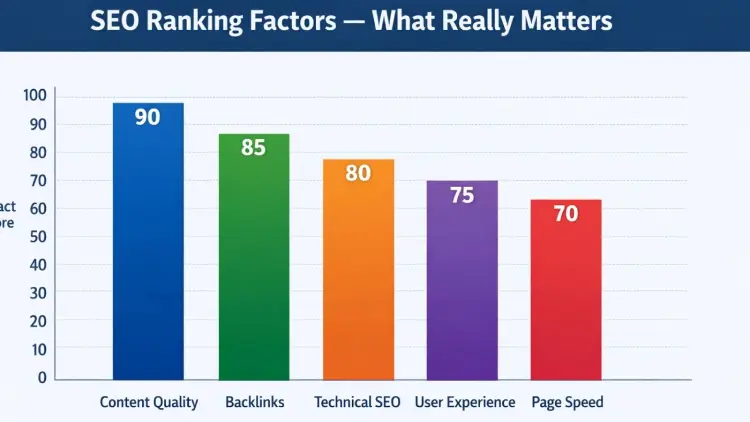
7. SEO Ranking Factors — What Really Matters
Content is king in search engine optimisation. High-quality, authoritative content attracts visitors and backlinks, signalling trust to search engines. But ranking also depends on many other factors, including:
- Backlinks: Quantity and quality from trusted sites boost authority.
- Keywords: Properly placed in content, headings, and meta tags.
- Page speed & UX: Fast, easy-to-navigate sites improve engagement.
- Technical SEO: Structured data, HTML, mobile-friendliness, and HTTPS.
- Usage metrics: Click-through rate, bounce rate, and time on page indicate value.
- Social signals: Engagement on social media increases visibility.
Search engine optimisation is a team effort — content creators, developers, and infrastructure teams all impact rankings. Managing SEO campaigns with research, optimisation, and tracking ensures long-term growth, higher traffic, and more conversions.
8. SEO Campaign Breakdown (Step-by-Step)
To outrank competitors and attract targeted visitors, follow these six SEO steps:
- Set Goals & Plan: Define objectives (sales, leads, engagement) and understand your audience to create a clear, actionable plan.
- Choose Keywords: Target relevant keywords that match search intent using tools like Google Search Console, SEMrush, or Ahrefs.
- Site Audit: Check technical issues, page speed, mobile-friendliness, meta tags, duplicate content, and navigation.
- Optimise On-Page Content: Improve titles, headers, meta descriptions, internal links, and multimedia for a better user experience.
- Build Backlinks: Earn high-quality links through guest posts, outreach, partnerships, and shareable content.
- Monitor & Adjust: Track rankings, traffic, engagement, and conversions to refine your SEO strategy continuously.
Why It Matters: Following this structured process boosts visibility, drives targeted traffic, improves conversions, and creates long-term growth for your website.
9. How to Measure Search Engine Optimisation Success
Tracking search engine optimisation performance is essential to know what’s working and where to improve. SEO success isn’t just about rankings—it’s about driving traffic, engaging users, and increasing conversions.
Key Metrics to Track:
- Organic Traffic: Shows how visible your site is in search results.
- Keyword Rankings: Indicates how well your pages are optimised.
- Click-Through Rate (CTR): Measures how many users click on your listing.
- Bounce Rate & Time on Page: Shows if users find your content valuable.
- Backlinks: Quantity and quality improve authority and rankings.
- Conversions: Tracks purchases, sign-ups, or inquiries from organic traffic.
How to Use the Data: Look for trends, compare performance over time, and adjust your strategy to improve traffic, engagement, and conversions.
Regularly monitoring search engine optimisation ensures your website stays optimised, competitive, and aligned with business goals.
10. SEO in the Age of AI
AI-powered search, like Google’s AI Overviews, is changing how users find information. Instead of just showing links, search engines now provide direct answers, which can reduce click-throughs to websites.
How to Adapt SEO:
- Optimise for AI summaries: Create clear, concise content that answers questions directly.
- Focus on commercial intent: Target queries where users are ready to take action.
- Enhance authority: Provide accurate, trustworthy, high-quality content.
- Structure content: Use headers, bullet points, and schema markup for easy AI interpretation.
Why It Matters: Search engine optimisation is still essential. Brands that adapt to AI-driven search can maintain visibility, attract the right audience, and discover new opportunities for engagement.
11. SEO Best Practices That Still Work
Modern search engine optimisation goes beyond keywords and backlinks. Success comes from high-quality content, strong technical foundations, and authority building, while adapting to trends like AI, voice search, and user experience.
Key Practices:
- Content: Create valuable, user-focused content that answers questions and engages visitors.
- Technical SEO: Ensure fast loading, mobile-friendliness, HTTPS security, and structured site architecture.
- Authority: Earn high-quality, relevant backlinks to build trust and credibility.
- Adapt to Trends: Optimize for AI summaries, voice search, and superior UX to stay competitive.
Following these practices helps your site maintain visibility, drive targeted traffic, and achieve long-term growth in a changing digital landscape.
12. Common SEO Mistakes to Avoid
Even small search engine optimisation errors can hurt your website’s performance. Avoid these common pitfalls:
- Ignoring Mobile Optimisation: Slow or unresponsive sites frustrate users and lower rankings.
- Low-Quality or Duplicate Content: Thin or copied content reduces visibility and credibility.
- Keyword Stuffing: Overusing keywords makes content unreadable and can trigger penalties.
- Poor Technical SEO: Slow speed, broken links, and messy site structure hinder crawling and indexing.
- Neglecting UX & Search Intent: Confusing navigation or irrelevant content drives visitors away.
- Ignoring Backlinks & Local SEO: Low-quality links and missing local optimisation limit authority and local reach.
Key Takeaway: Focus on quality content, strong technical SEO, user-friendly design, and authoritative backlinks to improve rankings, traffic, and overall performance.
13. How to Learn SEO & Get Started
To start with, search engine optimisation focuses on building a solid foundation before diving into advanced strategies.
Key Areas to Master:
- How Search Engines Work: Learn how sites are crawled, indexed, and ranked.
- Link Building: Earn high-quality backlinks to boost authority and trust.
- Keyword Research: Identify search terms your audience uses and match content to user intent.
- On-Page SEO: Optimise titles, headings, images, and content for readability and relevance.
- Technical SEO: Ensure fast loading, mobile-friendliness, secure connections, and a clean site structure.
Mastering these fundamentals allows you to create effective search engine optimisation strategies, attract targeted traffic, and adapt to trends like AI search and voice queries.
14. Is SEO Still Worth It?
Yes—search engine optimisation is still highly valuable, especially for e-commerce businesses. Unlike paid ads, search engine optimisation builds a long-term digital asset: your website, attracting free organic traffic over time.
Benefits:
- Compounding effect: Ranking pages boost overall site authority and help new content rank faster.
- Sustainable traffic & lower costs: Organic search reduces reliance on paid campaigns.
- Brand authority: Ranking for key terms builds trust and credibility in your niche.
Considerations: search engine optimisation takes patience—results usually appear in 3–6 months—and depends on your audience’s online behaviour. For fast results, paid ads may be better initially.
Key Takeaway: With effort and strategy, search engine optimisation provides lasting traffic, higher conversions, and a competitive edge, making it a smart long-term investment.
Final Thoughts
SEO is more than ranking for keywords—it’s about building a lasting digital presence. By combining quality content, technical optimisation, authority-building, and adapting to AI and new search trends, SEO drives long-term traffic, trust, and conversions.
Unlike paid ads, which stop when your budget ends, search engine optimisation continues to grow your site’s value over time. Businesses that stay adaptable, focus on user value, and commit to ongoing improvement will thrive in the evolving digital landscape.
Key Takeaway: Investing in SEO today creates a resilient, future-proof online presence, ensuring visibility, authority, and sustainable growth for your brand.
Frequently Asked Questions
1. Is search engine optimisation still worth it?
Yes. Search engine optimisation remains a top long-term strategy, driving steady traffic, brand visibility, and higher conversions when done right.
2. How long to see results?
Most websites see improvements in 3–6 months, with long-term growth continuing over time.
3. Content vs. Backlinks—which is more important?
Content is the foundation—high-quality content attracts visitors, and backlinks build trust and authority.
4. Will AI make search engine optimisation obsolete?
No. AI changes search, but search engine optimisation evolves with it. Focus on helpful content, technical optimisation, and user experience to stay competitive.