
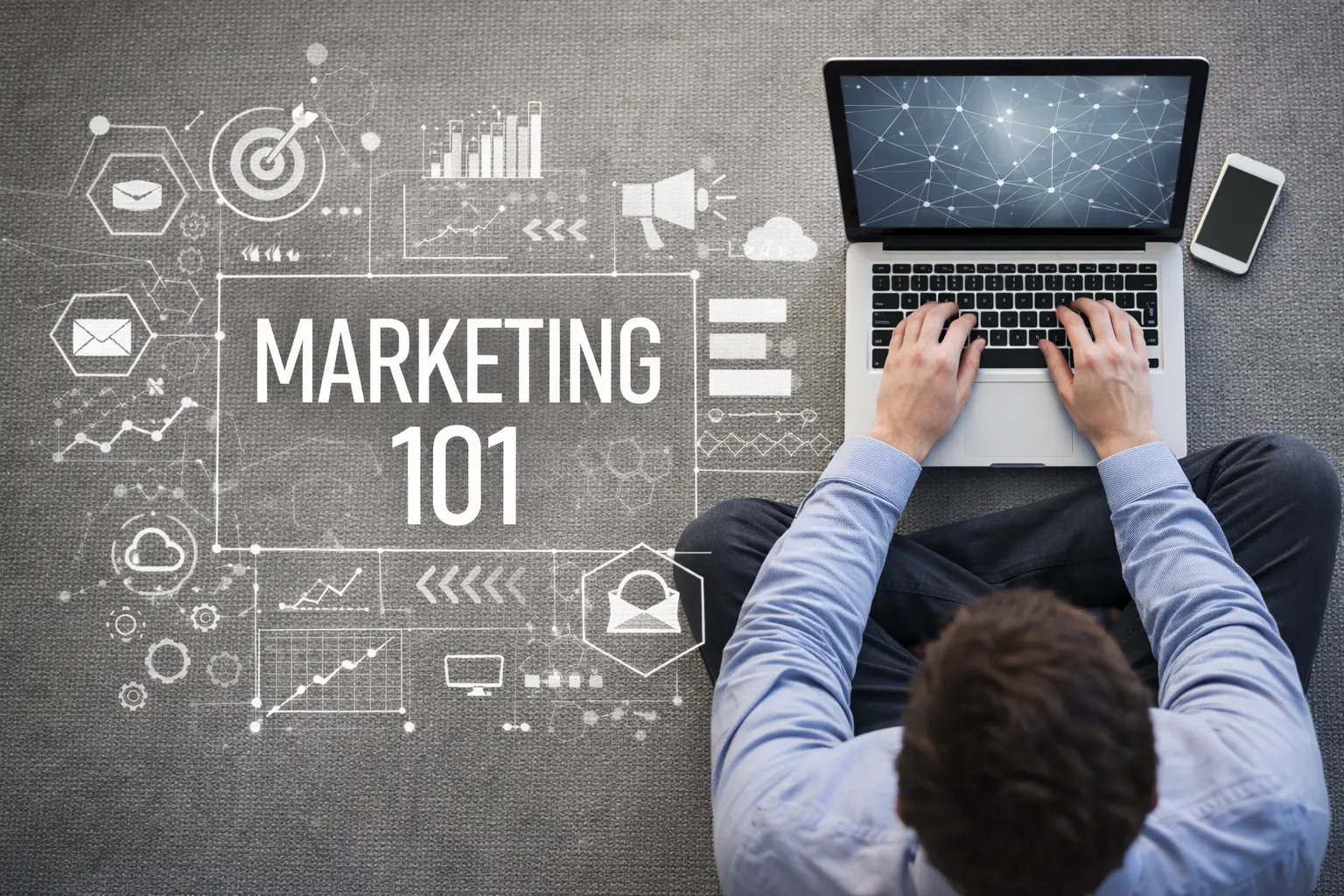
Marketing is the strategic process of understanding your audience’s needs and behaviours, creating value through products, services, and messaging, and using the right channels to connect with them. It focuses on building strong relationships, increasing brand awareness, driving engagement, and achieving long-term business growth through clear goals, consistent execution, and continuous optimisation.
What is Marketing 101?
Marketing 101 is attracting and engaging customers by understanding their needs, creating value, and building relationships. Traditional marketing uses offline channels like TV and print, while digital marketing uses online platforms like social media, email, and search engines for precise targeting and direct engagement.
Be Visible Where Your Customers Are
Customers search everywhere, and your brand needs to show up. SEO and AI visibility tools help you rank higher, optimise content, and track performance. While traditional marketing 101 builds awareness, digital marketing offers precise targeting, measurable results, and easy scalability. For example, Semrush attracts over 27.6 million monthly visitors largely through digital efforts. (source)
Fundamental Elements of Marketing
The four Ps—Product, Price, Place, and Promotion—form the foundation of marketing.
Product is what you offer, including its features and benefits. Price must balance affordability with profitability. Place ensures your product is available where your target audience shops. Promotion communicates value at the right time, place, and with the right message.
Understanding these elements helps businesses attract, convert, and retain customers effectively while achieving growth.
What Are Some Key Digital Marketing Channels?
In today’s digital-first world, reaching and engaging your audience requires a strategic mix of marketing channels that align with their preferences and behaviours. Understanding the strengths of each channel, how they work together, and how to optimise them is essential for any marketer.
1. Search Engine Marketing (SEM)
Search Engine Marketing (SEM) focuses on promoting your brand, website, or products on search engines like Google, Bing, or Yahoo. The goal is to reach people actively searching for topics related to your business. There are two main methods of SEM:
- Search Engine Optimisation (SEO): Organic strategies that improve your website’s ranking for relevant keywords. SEO takes time to show results, but it generates consistent, recurring traffic and revenue over the long term. Examples include creating high-quality blog content, optimising meta tags, improving site speed, and earning backlinks.
- Pay-Per-Click (PPC) Advertising: Paid ads that appear in search results or on partner sites. PPC provides immediate visibility and traction, allowing businesses to target specific keywords, locations, and demographics.
Keyword research is the foundation of SEM. Tools like Semrush’s Keyword Overview allow you to discover valuable keywords for SEO and PPC campaigns. You can see:
- Search volume: How often people search for a term.
- Keyword difficulty: How hard it is to rank organically.
- Personal keyword difficulty: Your site-specific ranking potential.
- Search intent: What the user wants to achieve.
- Trends: How interest in a keyword changes over time.
Additionally, you can explore keyword variations, related questions, and AI-generated keyword strategies to optimise your content and ads.
2. Social Media Marketing
Social media marketing uses platforms like Facebook, Instagram, LinkedIn, Pinterest, and TikTok to connect with your audience. Since the global population of social media users is more than 5 billion (almost 63% of the entire world population), it is an important channel of brand recognition, interaction, and conversion.
Social media campaigns can be:
- Organic: Building a community and sharing content naturally without paid promotion.
- Paid: Targeted ads to reach specific demographics or interests.
A successful social media strategy requires understanding your audience, posting the right content, and choosing the right platform based on where your audience spends their time.
3. Email Marketing
Email marketing remains one of the highest ROI marketing channels, generating between $32 and $45 for every dollar spent. It involves sending emails to subscribers to nurture relationships, provide value, and drive sales. Common types of email campaigns include:
- Welcome emails: Introduce your brand to new subscribers.
- Promotional email: Withdraw special offers, discount coupons or new items.
- Newsletters: Share updates about your business, industry trends, or insights.
- Re-engagement emails: Encourage inactive subscribers to interact again.
Personalisation and relevance are key to successful email marketing. Using segmentation and behaviour data ensures your messages resonate with each audience group.
4. Audience Research
Understanding your audience is essential for effective digital marketing. Researching demographics, behaviour, and preferences helps you create relevant content, choose the right channels, and refine your products or services. Tools like One2Target allow you to analyse competitor audiences, providing insights into age, gender, geography, income, education, and interests.
Based on this research, you can create buyer personas—ideal customer profiles that guide your campaigns and messaging.
5. Competitor Analysis
Analysing your competitors helps identify gaps, opportunities, and strategies to differentiate your business. You can research competitors’ products, marketing mix, traffic sources, social media activity, and customer feedback. Tools like Market Explorer allow you to find main competitors, compare market share, and assess growth potential.
Performing a SWOT analysis for each competitor (Strengths, Weaknesses, Opportunities, Threats) helps you position your brand more effectively.
6. Crafting a Unique Value Proposition
A value proposition communicates why customers should choose your product over competitors. It highlights how your product solves problems or delivers benefits. Key tips include:
- Address customer pain points.
- Highlight key benefits, not just features.
- Keep it clear and concise.
- Test and refine based on audience feedback.
Example: Shopify’s value proposition is:
“Be the next store they line up for. Shopify: Dream big, build fast and grow far.
7. Documenting Your Marketing Strategy
A documented marketing strategy ensures all activities align with your business goals and keeps your team coordinated. Key components include:
- Market research and audience insights.
- SMART marketing 101 goals.
- Unique value proposition.
- Marketing 101 channels and tactics.
- Budget allocation.
- Detailed action plan with responsibilities and timelines.
- Key performance indicators (KPIs) like traffic, engagement, conversions, and ROI.
AI tools, like the AI Marketing Strategy app, can help generate content, campaigns, and creative assets for every stage of the marketing 101 funnel.
8. Marketing 101 Calendar
A marketing 101 calendar organises campaigns, deadlines, and responsibilities, ensuring consistent execution. Plan content topics, schedule activities, assign responsibilities, and use project management tools like Trello, Monday, or Asana to track progress.
A well-structured calendar keeps your marketing 101 consistent, coordinated, and aligned with business objectives.
Track and Optimise Your Marketing Efforts
Marketing success depends on measuring results and improving strategies. Tools like Position Tracking let you monitor keyword rankings and get alerts for significant changes. Track performance across SEO, social media, email, and PPC to see what works, optimise underperforming campaigns, and make data-driven decisions. Platforms like Semrush provide a complete view of your search visibility, competitor insights, and content performance, helping you iterate and maximise engagement, conversions, and revenue.
The Marketing Funnel
The marketing funnel maps the customer journey from first learning about your product to becoming a loyal advocate.
It starts with awareness, where potential customers discover your brand, followed by interest as they explore your offerings. During consideration, they compare options, then show intent by engaging with your product. Purchase marks the transaction, after which loyalty and advocacy turn customers into repeat buyers and brand promoters.
Understanding the funnel helps businesses guide customers at every stage, increasing conversions and long-term growth.
Marketing Channels
Marketing channels are the platforms and methods businesses use to reach, engage, and convert their target audience. Choosing the right channels is critical for delivering the right message to the right people at the right time. Here’s a detailed look at key marketing channels:
1. Social Media Marketing
Social media marketing uses such platforms as Facebook, Instagram, Twitter, LinkedIn, and TikTok to advertise a product or service. These platforms allow brands to create campaigns that reach vast and diverse audiences. Beyond visibility, social media enables direct interaction with potential customers, giving insights into preferences and behaviour.
Benefits of Social Media Marketing:
- Wide Reach: With billions of users worldwide, social media provides unmatched audience access.
- Engagement: Comments, likes, shares, and messages build a community around your brand.
- Targeted Advertising: Platforms offer advanced demographic, geographic, and interest-based targeting.
- Cost-Effective: Compared to traditional advertising, social media campaigns often yield higher ROI.
- Analytics: Track performance in real-time to optimise campaigns.
Consistent posting of valuable content increases brand awareness, drives traffic, generates leads, and fosters customer loyalty.
2. Content Marketing
Content marketing focuses on creating valuable, relevant content to attract and engage customers. Common formats include blog posts, videos, infographics, podcasts, and social media posts.
Benefits of Content Marketing:
- Brand Authority: The content of high quality makes your brand a leader in the industry.
- SEO Advantages: Regular content updates improve search engine rankings and organic traffic.
- Customer Engagement: Engaging content keeps audiences interested and encourages longer site visits.
- Lead Generation: Offer content like guides or eBooks to capture customer information.
- Cost-Effective: Content marketing has long-term benefits compared to paid ads.
Effective content marketing builds trust, educates your audience, and nurtures leads through the sales funnel.
3. Influencer Marketing
Influencer marketing involves collaborating with individuals who have an established and trusted following to promote your products. Influencers act as authentic voices for your brand, enhancing credibility and reach.
Benefits of Influencer Marketing:
- Trust & Credibility: Influencers’ endorsement lends authenticity.
- Targeted Reach: Reach niche audiences difficult to access via traditional advertising.
- Content Creation: Influencers produce engaging, relatable content.
- Social Proof: Recommendations encourage audience adoption.
- High Engagement: Influencer campaigns often see higher interaction rates.
Platforms like TikTok, Instagram, and YouTube dominate influencer marketing, with nearly 70% of marketers using TikTok for campaigns in 2024.
4. Digital Marketing
Digital marketing encompasses all online channels, including social media, email, search engines, and websites. It allows global reach, precise targeting, and measurable results in real-time.
Benefits of Digital Marketing:
- Global Reach: Access customers worldwide.
- Measurable Results: Track performance, conversions, and ROI.
- Personalisation: Tailor messages for individual customer segments.
- Flexibility: Adjust campaigns quickly based on performance data.
- Interactivity: Engage users with interactive content, polls, and social features.
Digital marketing enables targeted, scalable campaigns that grow brand awareness and achieve business objectives efficiently.
If you’re looking to implement these strategies effectively, TechishWeb offers tailored digital marketing services designed to meet your business goals.
5. Print Marketing
Print marketing uses tangible materials like brochures, posters, flyers, and business cards to promote your product. Despite the rise of digital marketing, print remains effective for certain audiences and local campaigns.
Benefits of Print Marketing:
- Tangible Materials: Physical items leave a lasting impression.
- Local Reach: Target specific regions or communities effectively.
- Brand Recognition: Consistent design strengthens brand recall.
- Credibility: High-quality print materials enhance professionalism.
- Less Competition: Print media often faces less clutter than digital platforms.
Print campaigns complement digital efforts and are ideal for local outreach, events, and direct mail.
6. Event Marketing
Event marketing involves promoting products through live or virtual events, trade shows, workshops, or sponsored activities. Events provide direct interaction and an immersive experience.
Benefits of Event Marketing:
- Direct Interaction: Face-to-face engagement builds strong relationships.
- Product Demonstration: Show features and benefits in real-time.
- Lead Generation: Collect contacts and follow up with prospects.
- Brand Exposure: Increase visibility through participation and sponsorships.
- Networking: Connect with peers, partners, and industry leaders.
Events are highly effective for relationship building, brand visibility, and lead generation. Over 50% of businesses report events deliver the highest ROI compared to other marketing channels.
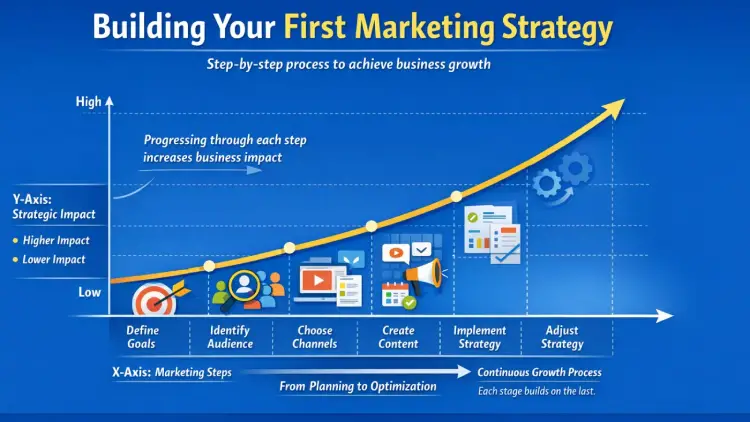
Building Your First Marketing 101 Strategy
Creating a marketing 101 strategy helps you reach business goals and attract customers.
1. Define Goals: Set SMART objectives like increasing brand awareness, generating leads, boosting sales, or building loyalty.
2. Identify Your Audience: Understand demographics, interests, and behaviour to tailor messaging and choose the right channels.
3. Choose Marketing Channels: Use social media, email, content, SEO, print, and events to reach your audience effectively.
4. Create Content: Develop blogs, videos, infographics, social posts, and emails to engage and educate customers.
5. Implement Strategy: Use a marketing calendar to execute campaigns consistently across channels.
6. Measure Results: Track website traffic, conversions, social engagement, leads, and revenue to see what works.
7. Adjust Strategy: Refine audience, optimise content, shift channels, and reallocate budgets based on performance data.
A clear, flexible strategy ensures your marketing drives awareness, engagement, and long-term growth.
Final Thought
Marketing is more than promoting products—it’s about connecting with your audience, creating value, and building lasting relationships. By combining a clear strategy with the right mix of channels, engaging content, and ongoing measurement, businesses can attract and retain customers, boost brand awareness, and drive long-term growth. Consistency, relevance, and adaptability are key to turning marketing efforts into lasting success.
Frequently Asked Questions
1. Traditional vs Digital Marketing:
Traditional marketing uses offline channels like TV and print, while digital marketing uses online platforms like social media, email, and SEO for targeted, measurable results.
2. What are the 4 Ps of Marketing?
Product, Price, Place, and Promotion – the key elements that guide strategy and attract customers.
3. How to choose marketing channels?
Pick channels where your audience spends time and align them with your goals and budget.
4. Why track marketing 101 efforts?
Monitoring performance helps optimise campaigns, improve results, and maximise ROI.