

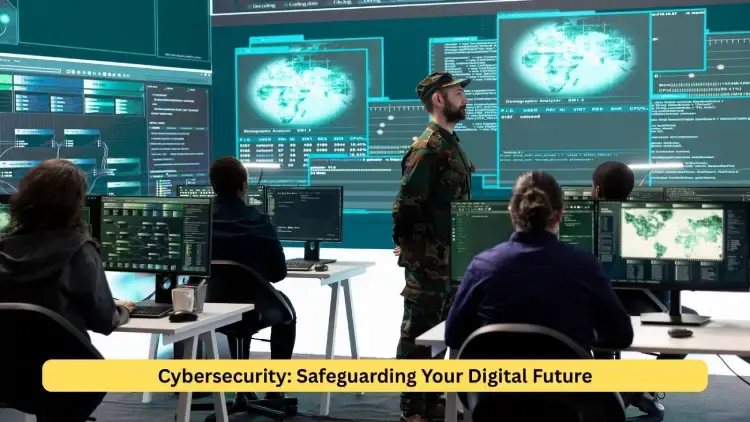
Cybersecurity is the practice of protecting computers, networks, and data from attacks or unauthorised access. Threats include malware, phishing, hacking, and system overloads.
It is essential for safeguarding personal and business data, preventing financial loss, and ensuring smooth operations. Key practices include using strong passwords, enabling multi-factor authentication, keeping software updated, and backing up data regularly.
What is Cybersecurity?
Cybersecurity is the practice of protecting computers, networks, devices, and data from cyber attacks, malware, and unauthorised access. It guarantees the availability, integrity and confidentiality of information.
It involves using technologies and practices like firewalls, antivirus software, encryption, and authentication, as well as educating users to prevent threats such as phishing, ransomware, and malware. Strong cybersecurity protects personal and business data, prevents financial loss, and ensures smooth operations.
Types of Cybersecurity
- Network Security: Protects networks from intrusions and malware using firewalls, VPNs, and monitoring.
- Application Security: Keeps software safe from vulnerabilities through secure coding and regular updates.
- Information Security: Protects data in storage and transit using encryption and access controls.
- Operational Security: Manages processes and user permissions to safeguard data.
- Disaster Recovery and Business Continuity: Solutions to recover operations and data that have been disrupted as a result of cyber attacks.
- End-User Education: Teaches users safe practices to avoid phishing, malware, and other risks.

The Scale of the Cyber Threat
Cyber threats are growing rapidly, with billions of records exposed every year. In the first nine months of 2019 alone, 7.9 billion records were compromised—a 112% increase from the previous year.
Most targeted sectors:
- Healthcare: Sensitive patient data
- Retail: Customer financial information
- Public institutions: Citizen and government data
But any organisation using networks can be a target for data theft, corporate espionage, or cyber attacks.
Global cybersecurity spending is rising to combat these threats, expected to reach $260 billion by 2026.
Government guidance includes:
- U.S.: NIST Cybersecurity Framework – Continuous monitoring, risk-based security
- U.K.: 10 Steps to Cyber Security – Employee training, secure system configurations
- Australia: ACSC – Incident response plans, threat mitigation guidance
Takeaway: Cyber threats are escalating. business must invest in security, monitor systems, and educate users to protect data and maintain operations.
Types of Cyber Threats
Cyber threats can be broadly categorised into three main types:
- Cybercrime: Attacks by individuals or groups for financial gain or disruption, such as identity theft, online fraud, and ransomware.
- Cyber Attacks: Often politically or strategically motivated, targeting systems to steal sensitive information or disrupt operations.
- Cyberterrorism: Aims to cause panic or fear by attacking critical infrastructure like power grids, healthcare, or communication networks.
Common methods used by attackers:
- Malware: Viruses, worms, ransomware
- Phishing: Fake emails or messages to steal data
- Man-in-the-Middle attacks: Intercepting communications
- DoS/DDoS attacks: Overloading systems to disrupt services
- Exploiting vulnerabilities: Weak passwords or unpatched software
Takeaway: Understanding these threats helps organisations and individuals strengthen cybersecurity defences.
Common Cyber Threats
Cyber threats come in many forms, targeting systems, data, and users.
1. Malware: Malicious software designed to damage systems or steal data. Includes:
- Virus: Spreads across files and systems
- Trojans: Disguised as legitimate software
- Spyware: Monitors user activity
- Ransomware: Locks files for ransom
- Adware & Botnets: Disperse viruses and execute activities unwarranted by the user.
2. SQL Injection: Attackers insert malicious code into databases to steal or manipulate sensitive data.
3. Phishing: Fake emails or messages trick users into revealing passwords, credit card info, or personal data.
4. Man-in-the-Middle (MitM) Attacks: Intercept communication between users to steal or alter data, often on unsecured networks.
5. Denial-of-Service (DoS) Attacks: Overwhelm systems with traffic, making them unusable and disrupting operations.
Key Takeaway: These threats exploit software, networks, and human error. Strong security measures, regular updates, and user awareness are essential to stay protected.
Latest Cyber Threats
Cyber threats are on the rise and are aimed at both an individual and an organisation.
1. Dridex Malware: A financial Trojan active since 2014, Dridex spreads via phishing emails or existing malware to steal banking credentials, passwords, and personal data, causing global financial losses. Prevention: Keep devices patched, use antivirus software, and back up files.
2. Romance Scams: Cybercriminals exploit dating apps and social media to trick victims into sharing personal info or money. In 2019, victims in New Mexico lost $1.6 million. Prevention: Verify online contacts and never share sensitive info.
3. Emotet Malware: A sophisticated trojan that steals data and spreads additional malware, often targeting weak passwords. Prevention: Use strong passwords, update software, and avoid suspicious emails.
Key Takeaway: Stay vigilant, update systems, use antivirus software, and educate yourself to guard against evolving cyber threats.
End-User Protection
End-user protection, or endpoint security, is crucial because individuals often unintentionally introduce cyber threats to devices.
Key protections include:
- Data encryption: Secures emails, files, and sensitive information during storage and transmission.
- Malware detection: Scans, quarantines, and removes viruses, Trojans, spyware, ransomware, and threats in the boot record.
- Real-time monitoring: Uses behavioural and heuristic analysis to detect evolving malware, including polymorphic threats. Suspicious programs can run in isolated sandboxes for safe analysis.
- Updates and education: Regularly updating security software and training users ensuresdefencess stay effective against new threats.
Takeaway: Combining endpoint security with informed users is essential to prevent malware, data loss, and cyber attacks.
Key Aspects of Information Security
Information security ensures the confidentiality, integrity, and availability (CIA) of data across physical, digital, and human components. Core aspects include:
1. Encryption
Encryption is the process of converting data into unreadable code that can only be accessed by authorised users with the correct decryption key. This protects sensitive information such as personal details, financial records, or medical data from unauthorised access.
2. Endpoint Security
Endpoint security protects devices like computers, laptops, mobile phones, and servers from threats. It includes antivirus software, firewalls, device management tools, and monitoring systems to prevent malware, ransomware, and unauthorised access.
3. Physical Security
Information security also considers physical measures to protect data, such as:
- Locked server rooms and restricted access to IT infrastructure
- Security cameras and surveillance systems
- Secure storage of sensitive documents and backups
4. Policies and Procedures
Information security involves establishing rules and processes for handling data securely. Examples include:
- Access control policies specifying who can view or edit information
- Data retention and disposal protocols
- Incident response plans for handling breaches
Why Information Security is Important
In today’s digital age, almost every aspect of life—communication, shopping, banking, healthcare, transportation, and entertainment—is connected to the internet. As a result, vast amounts of personal and organisational data are stored online. Without proper information security measures:
- Sensitive personal data can be stolen or misused
- Business and government data can be compromised, causing financial or reputational damage
- Systems and operations can be disrupted
Both cybersecurity and information security are critical for safeguarding this data. While cybersecurity focuses on protecting systems from external attacks, information security ensures that all forms of data—digital, physical, or human—remain safe, accurate, and accessible to authorised users.
Common Cyberattacks and Threats
Cyberattacks come in many forms, but three of the most common are phishing, ransomware, and social engineering.
1. Phishing: Trick users into clicking malicious links or downloading malware via emails, texts, or social media. Often used to steal passwords, banking info, or personal data.
2. Ransomware: Malware that encrypts files or systems, demanding a ransom for access. Paying doesn’t guarantee data recovery. Attacks have increased 13% in the past five years, costing millions per incident.
3. Social Engineering: Manipulates individuals to reveal sensitive information through impersonation, pretexting, or baiting. Attackers often pose as IT staff or trusted contacts.
Protection Tips:
- Keep software and systems updated
- Use antivirus and endpoint security
- Train users to recognise phishing and suspicious requests
- Maintain secure backups
Takeaway: Awareness and strong cybersecurity practices are essential to defend against these evolving threats.
Who is Behind Cyberattacks?
Cyberattacks can come from both external attackers and insiders.
External threats include:
- Organised criminals: Target financial or sensitive data for profit
- Professional hackers: Skilled attackers with financial, political, or ideological motives
- Amateur hackers: Opportunistic individuals using pre-made tools
Insider threats come from people with authorised access:
- Negligent employees: Careless with passwords or security policies
- Disgruntled employees: Intentionally leak or damage data
- Business partners or clients: Can compromise systems accidentally or deliberately
Key Takeaway: Both outsiders and insiders pose serious risks. Mitigation requires access controls, employee training, monitoring, and strong security tools.
Developing Cyber Awareness
Cyber awareness helps individuals and organisations protect data and prevent attacks. Rodney Royster recommends the “defence in depth” approach—using multiple layers of security, just like protecting physical valuables. Key tools include:
- Antivirus software to detect and remove malware
- Encryption to protect data in transit and storage
- Firewalls, IDS, and IPS to block or prevent threats
Best practices for users:
- Create strong, unique passwords and update them regularly
- Enable multi-factor authentication (MFA)
- Be cautious online and avoid suspicious links or downloads
If a cybercrime occurs, report it to the FTC (fraud, identity theft, ransomware, unwanted calls). Trusted resources like CISA offer guidance and training.
Takeaway: Combining security tools, safe practices, and reporting incidents builds strong cyber awareness and reduces risk.
Do You Need a Degree to Be a Cybersecurity Professional
A degree in cybersecurity can help build the skills and mindset needed to protect systems, manage risks, and defend against cyber threats. While not always required, a bachelor’s degree is often expected for IT and cybersecurity roles, according to the U.S. Bureau of Labour Statistics.
Entry-Level Roles: Cybercrime Analyst, Cybersecurity Specialist, Incident Analyst, IT Auditor – requiring skills like incident response, vulnerability assessment, and auditing.
Mid-Level Roles: Cybersecurity Analyst, Consultant, Penetration Tester – focusing on risk analysis, project management, and security testing.
Advanced Roles: Cybersecurity Architect, Engineer, Manager – involving system design, cloud security, and team oversight.
Takeaway: A degree, combined with practical experience and certifications, opens doors to diverse careers in cybersecurity across private, public, and military sectors.
Choosing a Cybersecurity Platform
Digital transformation expands IT capabilities but also increases the attack surface, making security more complex. Siloed tools and point solutions create blind spots and management challenges, so enterprises need a unified, integrated platform.
Key considerations:
- Convergence: Does it combine networking and security in one solution?
- Integration: Can it work with multi-vendor tools through APIs?
- Coverage: Does it protect all current and potential attack surfaces, including cloud, endpoints, and IoT?
- Threat Intelligence: Is it backed by centralised, real-time intelligence?
- Management: Does it offer a single-pane-of-glass dashboard for visibility and control?
Takeaway: Only an integrated, converged platform can simplify management, improve visibility, and protect all critical assets from evolving cyber threats.
Cybersecurity Risk Statistics
Cyberattacks do more than disrupt operations—they cause financial losses, reputational damage, and regulatory penalties.
Financial & Operational Impact:
- The average data breach costs $2.8 million in lost business.
- Global cybercrime costs are expected to reach $10.5 trillion by 2025 and $23 trillion by 2027.
- Organisations using AI and automation in security save $2.22 million on average.
Reputational & Compliance Risks:
- Attacks often occur via phishing, poor security practices, or ransomware.
- Exposed data can erode customer trust and damage brand credibility.
SMBs vs. Enterprises:
- Small businesses are increasingly targeted due to weaker defences; 1 in 5 SMBs hit by cyberattacks may close or file for bankruptcy.
Takeaway: Cybersecurity threats affect finances, operations, and reputation. Investing in robust security, AI, and employee training helps reduce losses and protect critical assets.
Workforce Disruption and Supply Chain Risk
Cyberattacks can halt employee productivity and disrupt workflows. For example, a 2023 ransomware attack on a U.S. IT cloud provider caused outages at 60 credit unions, affecting thousands of employees and customers.
Supply chain attacks are increasingly common, targeting vendors or partners to gain access to multiple organisations. A 2024 Statista survey found financial loss is the most frequent outcome. Such attacks can disrupt operations, delay services, and compromise sensitive data, highlighting the importance of robust cybersecurity and third-party risk management.
Takeaway: Cybersecurity threats can impact both internal operations and external partners, making workforce and supply chain protection essential.
Cybersecurity Training & Certification
Humans are often the weakest link in cybersecurity, making employee education and skills development essential. End-user training teaches employees to recognise threats like phishing, malware, and social engineering, while comprehensive programs cover industry-specific risks and emerging threats.
Online training platforms make learning flexible, and certification programs provide structured skill development, validating expertise in areas like network security, cloud security, and ethical hacking.
Fortinet’s 2024 report highlights the value of certifications:
- 91% of organisations prefer certified candidates
- 90% fund employee certification training
- 95% report improved performance with certified teams
Takeaway: Training and certification turn employees into a first line of defence, helping organisations reduce risks and strengthen overall cybersecurity resilience.
Managed Cybersecurity Services
Managing cybersecurity in-house can be complex and costly, so many organisations turn to Managed Security Service Providers (MSSPs) or a hybrid approach. MSSPs offer scalable, expert-driven solutions, providing advanced technology, threat intelligence, and 24/7 monitoring without the need to build an in-house team.
Key services include:
- MDR (Managed Detection and Response): SOC experts monitor endpoints, detect threats, and respond in real-time.
- XDR (Extended Detection and Response): Secures all layers of IT infrastructure—endpoints, networks, and cloud—reducing detection and response time.
Takeaway: MSSPs provide cost-effective, comprehensive cybersecurity, making them ideal for organisations seeking expertise, flexibility, and full protection against evolving threats.
SASE, SIEM, and SOAR
Secure Access Service Edge (SASE) combines network security and WAN functions into a cloud-based service, providing consistent policies, secure access for remote users, and protection for hybrid environments.
Security Information and Event Management (SIEM) collects and analyses security data across the network, offering real-time alerts, centralised monitoring, and proactive threat detection.
Security Orchestration, Automation, and Response (SOAR) automates incident response by integrating with SIEM and other tools, reducing manual effort, speeding up response times, and improving overall security operations.
Takeaway: Together, SASE, SIEM, and SOAR provide comprehensive, efficient, and scalable cybersecurity, protecting both users and networks from evolving threats.
Cyber Safety Tips – Protect Yourself Against Cyberattacks
Protecting against cyber threats requires a combination of technology and good practices. Key tips include:
- Update software and OS: Install the latest security patches to fix vulnerabilities.
- Use antivirus software: Programs like Kaspersky Premium detect and remove malware. Keep them updated.
- Use strong passwords: Create complex, unique passwords and enable multi-factor authentication.
- Be wary of emails: Never open attachments or open links from a sender without knowing them.
- Avoid public Wi-Fi: Unsecured networks can expose your data; use a VPN if needed.
- Educate users: Train employees or family members to recognise phishing and suspicious activity.
Takeaway: Combining updated software, strong security tools, safe online habits, and user awareness is the best way to prevent cyberattacks.
Final Thought
In today’s digitally connected world, cybersecurity is no longer optional—it’s a critical component of personal, business, and national safety. Threats are evolving constantly, targeting technology, data, and even human behaviour. Organisations and individuals must adopt a multi-layered approach that combines technology, policies, training, and vigilance. By staying informed, implementing best practices, and investing in tools, platforms, and skilled professionals, we can reduce risks, safeguard sensitive information, and ensure the continuity and trustworthiness of our digital lives.
Frequently Asked Questions
1: What is cybersecurity?
Cybersecurity protects computers, networks, and data from attacks, ensuring confidentiality, integrity, and availability.
2: What are common cyber threats?
Common threats include malware, phishing, ransomware, social engineering, SQL injections, and DoS attacks.
3: How can organisations improve cybersecurity?
Use MFA, backups, training, encryption, endpoint protection, network segmentation, and consider managed security services.
4: Do I need a degree for cybersecurity?
A degree helps, but experience and certifications can also lead to roles from analyst to architect.