


Machine Learning SEO is a technique of improving the optimisation of websites through the application of artificial intelligence to process large volumes of data, interpret user intent, forecast trends, and find high-performing content. In comparison to the conventional method of search engine optimisation based on the placement of keywords manually and the utilisation of backlinks, machine learning SEO is based on context, relevance, and user satisfaction. It allows making smarter decisions, automating repetitive processes, and allows marketers to create content that evolves search algorithms, increasing the visibility and interaction.
What is Machine Learning in SEO?
Machine learning, as a part of A, allows systems to learn based on available data and to increase performance without explicit programming. In direct search engines, it assists the search process,s and the search engines rank the pages based on their relevance, authority, and user interest as opposed to mere keywords. With models such as supervised, unsupervised, semi-supervised, and reinforcement learning, the search results are always optimised by the algorithm, according to the actual user behaviour.
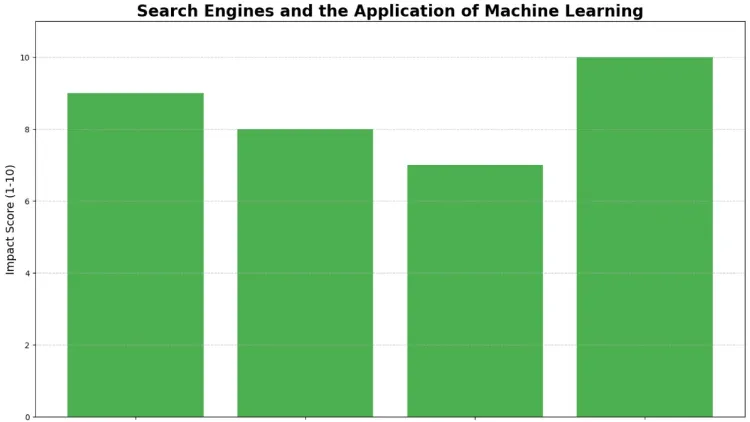
Search Engines and the application of machine learning
Machine learning is used in search engines to rank files in various ways to ensure the provision of search outcomes that are applicable and effective.
Perceiving Will and Situation
Algorithms study the intent of the search with a view to establishing whether the user desires information, products, comparisons or solutions. This development transformed search engine optimisation to intent-driven search engine optimisation.
Natural Language Processing.
Contemporary systems perceive the conversation of language, the semantic association of subjects. This enables naturally written content to perform better than keyword-optimised content.
Behavioral Learning
Machine learning looks at user engagement indicators like clicking behaviour, scrolling behaviour, and page time. The pages that delight the users receive more ranking rewards as time goes on.
Continuous Improvement
The machine learning systems are dynamic as opposed to older algorithms. They train on billions of interactions every day and perfect ranking decisions without being written up.
This is to show that machine learning has become an important ranking mechanism by SEO today.
The Reason why Machine Learning SEO is important
Machine learning SEO is important because the ranking factors are dynamic as opposed to fixed. Quality is no longer measured individually anymore, but the algorithm compares quality based on hundreds of signals simultaneously.
Key advantages include: Optimisation decisions that are based on data.
- Responses to ranking opportunities become quicker.
- Better congruence with the expectations of the users.
- Increased customisation of content.
- More intelligent competition research.
To support its machine-learning-based approach, modern SEO incorporates all three main categories of optimisation: technical SEO, content SEO, and off-page SEO, into one authentic system.
The famous 80/20 rule is also applicable in this case: a minor part of optimised content is frequently used to bring most of the organic traffic. Machine learning assists in determining the pages that should receive a high priority.
Methods of Machine Learning SEO
Machine learning SEO has a number of elements underpinning its functionality.
Data Collection
Algorithms collect information based on search queries, engagement, backlinks, and web performance indicators.
Pattern Recognition
Machine learning will determine a relationship between those top-ranked pages and those optimisation practices that were successful.
Prediction Models
Predictive systems determine the estimation of potential and future performance trends.
Automation
Automation made by AI is used to perform such activities as clustering of keywords, suggestions of internal links, and content scoring.
These parts are consistent with the fundamental pillars of machine learning, including data, algorithms, computing power, and feedback.
Machine learning, search optimisation, and search engine optimisation
Keyword research has been transformed into topic research. Machine learning examines the association between keywords, user queries and semantics.
Machine learning SEO objects to an isolated phrase and promotes the construction of topical authority through the course of related clusters of content. This corresponds to current marketing models such as the 5 Cs of content: lack of clarity, consistency, credibility, creativity and customer orientedness.
Another concept presented in the search behaviour, the so-called golden triangle, involves the fact that users are concerned with the highest search results, as most of their attention is paid to them, and they must be optimised.
Are you willing to increase your search exposure? TechishWeb has experienced MLEO services to utilise machine learning to learn and identify the best ways to rank your content and gain more traffic and online authority. Get in touch with us now to start.

Machine learning-based content optimisation
Machine learning SEO enhances optimisation of the content by monitoring structure, readability, and relevance in relation to high-performing pages. This enables more intelligent, statistically based modifications which increase search-visibility.
Clarity/onomatopoeia of Headings and Hierarchy
AI analyses heading arrangements to facilitate the readability of the content in an easy manner and assists search engines in comprehending the key issues.
Intent-Focused Writing
Machine learning puts a lot of emphasis on matching content with user intent, so that it matches what people are searching for.
Semantic Keyword Coverage
The AI will recognise similar keywords and clusters of topics and will make the content more complete and relevant.
Balanced Internal Linking
AI could propose internal connections to enhance navigation, allocate the link equity and enhance SEO.
User-Friendly Formatting
Machine learning technologies are used to improve user experience, and this is achieved by looking at the readability, length of the paragraphs and the use of visuals.
Examples of content types that have beenoptimisedd according to AI are articles, guides, product pages, and multimedia. With the help of AI knowledge and human imagination, pieces of content should be able to become more interactive and even more popular in search engines.
Machine Learning-based predictive SEO
One of the best advantages of machine learning SEO is predictive analysis. Algorithms make predictions according to the historical performance and search pattern.
Machine learning evaluates:
- Seasonal search patterns
- Emerging topics
- Competitive opportunities
- Content update timing
This predictive ability enables marketers to post messages before they are in high demand, and the rankings are enhanced.
Machine Learning SEO Tools
There are a number of AI-driven solutions that assist with machine learning SEO. The solutions include Surfer SEO, SEMrush, Ahrefs, AI writing helpers, and others that analyse huge amounts of data to generate recommendations on optimisation.
Several marketers also rely on conversational artificial intelligence solutions that can be technically supported by the use of machine learning to generate outlines, format content, and enhance the use of keywords. These systems eevidencethe capability of machine learning tools to boost productivity, and at the same time, preserve human control.
The most effective ones are those that feature analytics, optimisation guidance, and performance tracking as opposed to the ones that focus on automation.
User experience role in machine learning SEO
User experience is so important since machine learning gauges the indication of fulfilment.
Significant UX considerations are:
- Speed and responsiveness of the page.
- Mobile usability
- Clear navigation
- Text and graphic presentation.
- Content usefulness
Digital experience ooptimisationhas now overlapped with search optimisation. The idea of SEO is also called search experience optimisation since the satisfaction of the users directly affects rankings.
Machine Learning and Technical SEO
Technical SEO makes sure that algorithms are in a position to make sense of the content and index it.
The most important technical components are:
- Structured data markup
- Secure connections (HTTPS)
- Fast loading times
- Scalable Web structure.
- Optimized metadata
Search engine optimisation elements that are hidden, like schema markup, internal connection structures, and optimisation of the back-end, are important, although users do not often see this directly.
Machine Learning SEO-associated automation
Machine learning application as automationdecreases repetition of duties and enhances accuracy.
Examples include:
- Automated keyword grouping
- SEO audits
- Content scoring systems
- Rank tracking
- Competitor monitoring
Automation is an expression of wider AI concepts of perception, learning, reasoning and decision-making, commonly referred to as a primitive area of intelligent systems.
Machine AI SEO Strategies
Strategies that can be adopted to achieve effective machine learning SEO are:
- Focusing on user motive as opposed to keyword density.
- Creating authority topic clusters.
- Staying up to date with already existing content.
- Constant analytics monitoring.
- Integrating the essence of AI and human innovation.
The so-called 3 Cs of quality, consistency, and credibility of the material are often followed by successful optimisation.
Frequent Failures of Machine Learning SEO
Certain pitfalls could be used to limit:
- |human|>Unrevised over- automation.
- Publishing thin content
- Ignoring technical SEO
- Pursuing an algorithm rather than users.
- Failure to pay attention to engagement measures.
Even intelligent AI systems tolerate poorly when strategies are ambiguous or of bad quality, the reason why most technology projects do not work, regardless of the excellent tools.
Advantages of Machine Learning SEO
Machine learning search engine marketing has quantifiable benefits:
- Quickened optimisation processes.
- Better targeting accuracy
- Improved ranking stability
- Scalable means of creating content.
- Improved marketing knowledge.
These advantages are in line with the more general principles of marketing, like the 5 Vs of marketing,g which include value, volume, velocity, variety, and veracity, ty where data quality drives smarter decisions.
SEO Challenges of Machine Learning
Since there are some benefits, machine learning SEO has a number of challenges that need to be addressed.
Dependence on Accurate Data
Machine learning is dependent on excellent information. Incomplete or bad data may result in wrong optimisation decisions.
Tool Learning Curves
Artificial intelligence-based SEO services might be complicated, and the user might require some time to know how to utilise analytics and automation powers.
Rapid Algorithm Evolution
The rate at which search engines change is high, and the strategies used have to keep changing.
Transparency and Ethical Issues
In this case, automation will bring up the concern of content originality and the use of data, and it will be relevant to involve humans in the process of reviewing the data.
Since AI systems can give wrong suggestions when the information is biased or scarce, it is crucial to have human moderation of the system to achieve balanced and effective optimisation.
The Future SEO of Machine Learning
Machine learning SEO in the future will be characterised by a greater incorporation of artificial intelligence practice into the search engines and digital marketing strategies. Optimisation is slowly escaping the manual adjustments and the adaptive and data-driven systems.
Voice and Conversation Search Optimisation
With voice search on the rise, content will have to be in a form that can be searched through natural language queries and conversational search behaviour.
Individualised Search Experiences
Machine learning enables search engines to provide answers to user behaviour and preferences, and unusual content involving the audience is more valuable than ever.
Adaptive Ranking in Real-Time
The search rankings will become more dynamic on live performance signals, where, in place of infrequent optimisation, the idea of constant updating of content should be promoted.
Intelligent Content Generators
The AI tools will help in research and optimisation, quality and originality will not be lost, but will require human creativity.
User Intent Modelling based on Prediction
Machine learning is used to determine future search trends to enable creators to pre-plan content before it is demanded.
Instead of removing SEO, AI is transforming it, and thus the long-term value of strategic thinking and quality of contentincreasese.
Machine Learning SEO and Traditional SEO
The Machine learning SEO demonstrates how the current optimisation has transformed the old era of SEO practices. They both seek to enhance search visibility, but they are different with regard to the way data is used and the adjustment of strategies over time.
- Traditional SEO
- Machine Learning SEO
- Keyword-focused
- Intent-focused
- Manual analysis
- Data-driven automation
- Static strategies
- Adaptive optimization
- Periodic updates
- Continuous learning
- Limited insights
- Predictive analytics
Focus Difference
Machine learning SEO places more emphasis on uuser intentand searching behaviours, whereas traditional SEO wasn’t concerned with these factors.
Approach to Optimisation
The past SEO was very dependent on manual research and inflexible strategies. Machine learning SEO senses automated analysis to modify ooptimisationon real-time data and performance indicators.
Strategy Evolution
The old optimisation was occasionally updated, but machine learning SEO is constantly being updated as the algorithms adapt to the interactions of users.
Machine learning SEO does not exclude traditional SEO
Practices to use to implement Machine Learning SEO
Effective machine learning SEO requires integration of intelligent technology and effective optimization behaviors. Several practical best practices will enhance performance and make the content natural and user-oriented.
Produce centrally oriented and quality content.
The machine learning-driven search engines give priority to useful and relevant information. Instead of the last point, which is stuffing the keywords, focus on responding to user intent, simplifying the structure, readable format and useful information.
AI should be used as a helper, not as a substitute
AI tools assist in research, ideas of keywords and performance insights; nevertheless, the human imagination is necessary. Quality should be achieved by the method through refining tone, accuracy and originality by writers.
maximise technical underpinnings
A quick, mobile-responsive site that is correctly internally linked and well structured assists the search engines to comprehend content more effectively,y leading to better visibility.
If an analysis of performance is done regularly
Test analytics information when you want to know what works and what should be improved. Newly modified content on robot responses increases the performance-based long-term results of SEO.
Have regular publishing dates.
Regular publishing becomes a source of authority and assists the search engines in determining the reliability of the websites as time goes by.
Concentrate on long-term authority building.
Rather than rapid ranking methods, seek to establish expertise with content that is valuable in a regular, dull and drab fashion and incremental value.
When intelligent systems and human creativity complement one another, successful machine learning SEO schemes will benefit the situation.

Conclusion
Machine learning search engine optimisation has transformed modern search optimisation through a combination of artificial intelligence, data processing, and a user-centred approach. Search engines currently analyse the meaning, intent and experience in addition to keywords.
With the insight into the impacts of machine learning on the rankings, companies will be able to produce more intelligent content, enhance their visibility, and adjust to changing algorithms. Machine learning SEO helps marketers to stop making guesses and creating strategies that are sustainable based on real data and actual user behaviour.
With the technological growth, SEO is bound to keep on changing with AI, but the idea is the same: to deliver useful, relevant content to the users, which is actually of benefit.
Frequently Asked Questions
1. What is the benefit of machine learning in search engine optimisation?
It evaluates user intentions, interaction, as well as sequencing processes to make data-driven, responsive optimisation choices.
2. Can AI replace humans in SEO?
No, AI will help in research and analysis, yet human creativity and supervision are still vital.
3. What types of content are the most useful?
Articles, guides, product pages and multimedia are optimised in terms of readability, relevance and intent to use them.
4. What are the main challenges?
Relying on quality data, learning on the tool, updating an algorithm, and human supervision.