
In today’s competitive digital landscape, relying solely on classic SEO techniques is no longer enough. The Best AI Model SEO Tracking Tools are transforming the way businesses optimize their content, monitor keyword rankings, analyze performance metrics, and uncover new growth opportunities. By leveraging these advanced AI tools, marketers can make data-driven decisions, enhance content strategies, stay ahead of competitors, and achieve higher ROI more efficiently than ever before.
What are the Best AI Model SEO Tracking Tools
In 2026, SEO will have developed into what it is now. Although the more traditional approach of listing keywords, linking, and optimizing a page remains essential, AI is currently significantly important in automating these mechanisms and improving them. AI is able to forecast trends, process mass data, and create useful insights that people can miss.
By employing optimal AI mode SEO keeping tools, marketers will be able to:
- Following the keywords more precisely across search engines.
- Determine technical problems that can influence rankings.
- Keep an eye on the competitors and find new possibilities.
- Enhance search intent optimization and optimize user behavior.
There is no substitution of human beings with AI-driven SEO, but efficiency. AI has become an invaluable tool in the new digital marketing environment, and even ChatGPT can now be used to research SEO audits, content recommendations, and strategy creation.
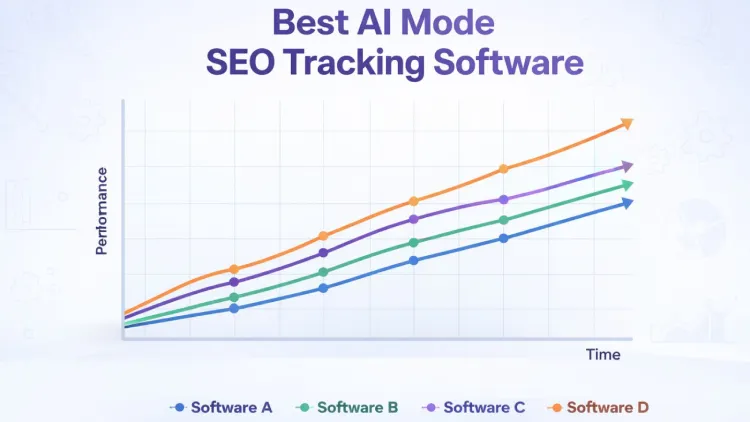
Best AI Mode SEO Tracking Software
This is a closer examination of the most recommended AI mode SEO tracking software that will help you take your SEO to the next level.
1. SEMrush
SEMrush has always been one of the trump cards of the SEO specialists. Its AI has made it one of the best companies that can be used by not only beginners but also advanced personnel.
Key Features:
- Keyword Tracking: The AI-based functionality of SEMrush can monitor hundreds of keywords on the fly to assist you in noticing changes in ranking positions and search trends.
- Site Audit: Technical audits are thorough and reveal crawl errors, duplicate content, and other problems in the way of SEO.
- Competitor Analysis: AI looks at your site in comparison with the rivals to determine the gaps and opportunities.
To the question of which of the two AI tools should be used to analyze SEO, the first choice should be SEMrush most of the time because of the accuracy and prognostication it provides.
2. Ahrefs
Ahrefs is famous due to its backlink analysis and competition research services, and the AI-powered insights of this product make it a unique search tracking application.
Key Features:
- Backlink Monitoring: The quality and quantity of backlinks are monitored, which is a basis for an SEO ranking.
- Content Explorer: Find out what works in your niche so that you know it to base your strategy on.
- Rank Tracker: Estimates the performance of the keywords and sends a notification of the ranking changes.
Ahrefs suits companies that value AI, together with efficient link-building and content analysis.
3. Moz Pro
Moz Pro includes the usage of AI to perfect the standard SEO processes. It works best with small businesses and agencies that desire practical recommendations.
Key Features:
- Keyword Explorer: Proposes useful keywords that have a search volume and difficulty index.
- Site Crawl: Identifies problems on the sites that may negatively affect rankings.
- Custom Reports: Produces more team and client analytics reports.
The AI-based recommendations can assist the marketer in attaining more precise SEO auditing and content optimization to eliminate the disconnect between human judgment and machine accuracy.
4. Surfer SEO
Surfer SEO is an application based on the optimization of the content that compares your pages to the best-performing rivals through the use of AI models.
Key Features:
- Content Score: Intelligent recommendations to improve on-page search optimization.
- SERP Analyzer: Examines the pages of the competitors with an estimate of the best use of keywords and structure.
- Keyword Research: This is done to identify long-tail and semantically related keywords to have better targeting.
Surfer SEO enables content creators to make sure that what they are creating works in line with user intent, which is likely to increase their potential of placing higher in search results.
5. Frase
Frase is an AI writing and SEO analysis tool that will make content efficient.
Key Features:
AI Content Suggestions: Provides outlines and content suggestions based on SEO intentions.
- SEO Analytics: monitors the performance of the content to determine gaps.
- SERP Analysis: Decomposes pages at the top ranking and uses them to make changes in the content.
Frase shows how AI can perform good SEO, including ideation of content, ranking, and tracking, simplifying the whole procedure.
6. RankMath AI
RankMath AI is an SEO tool that is compatible with WordPress, which provides AI expertise directly on your dashboard.
Key Features:
- AI Content Optimization: Provides recommendations to improve on-page search engine optimization based on the analysis of actual statistics.
- Rank Tracking: To track trends and progress of the keywords
- Automated Reports: Gives techniques of SEO in an automated way.
The tool is ideal when one wants to maximize their content when managing a WordPress site in the most efficient way possible.
Ready to Take Your SEO to the Next Level?
At TechishWeb, we don’t just write about the best AI mode SEO tracking software — we implement it! Our expert team can optimize your website, track rankings, and boost your organic traffic using cutting-edge AI tools.
The way AI is enhancing SEO Strategies
AI can be used in SEO beyond rudimentary keyword tracking. The AI models can optimize all of your strategies:
- Content Optimization: AI examines the purpose of a search, competitors, and trending, and proposes some improvements.
- Technical SEO: AI finds crawl flaws, broken links, and Web speed problems.
- Competitor Analysis: AI monitors the strategies of the rivals to find opportunities.
- Predictive Analytics: AI predicts ranking changes and assists marketers in changing some strategies in advance.
When businesses have these abilities, it is possible to accomplish greater organic traffic and better engagement.
Understanding SEO in 2026
The current SEO depends on technical, on-page, off-page, and content methods. The four pillars are the building blocks of any successful campaign.
- Technical SEO: Makes the site crawlable, fast, and mobile-friendly.
- On-Page SEO: The focus keyword does not appear in the SEO title.
- Off-Page SEO: It involves emphasizing backlinks, social cues, and brand mentions.
- Content SEO: Produces meaningful, relevant, and user-centric content that ranks.
The implementation of AI into the pillars may be used to attain close to 100 percent efficiency in SEO by automating, enhancing accuracy, and generating data-driven insights.
Types of AI Relevant to SEO
The knowledge of the types of artificial intelligence contributes to selecting the optimization tool:
Reactive Machines: Simple AI responding to the inputs in the present (e.g., simple ranking alerts).
- Limited Memory: Predictive AI with historical capabilities (e.g., ranking trends).
- Theory of Mind: AI that is able to comprehend user behaviors is advanced.
- Self-Thinking AI: AI that will be able to work out its own strategy in the future.
The current AI SEO tools mostly follow limited memory models, which implies that they can analyze the historical trends to offer meaningful information.
- Some of the most popular AI models are: NLP-based, machine learning, deep learning, neural networks, predictive analytics, computer vision, and reinforcement learning- most of them underpin the most effective AI mode SEO tracking tools.
ChatGPT and SEO
ChatGPT can be regarded as an artificial intelligence model with limited memory. It is not a complete SEO tool, but it can:
- Swiss-cheese approach to SEO through content and structure analysis.
- Postulate keywords and content enhancements.
- Write SEO friendly articles by writing meta descriptions and headings.
Nevertheless, artificial intelligence does not mean that the human approach is being displaced. Integrating ChatGPT with specialized tools such as SEMrush, Ahrefs, or Surfer SEO yields optimal results.
Achieving Higher Rankings
Being number 1 in search optimization stops being only an act of correct choice of keywords, but rather a planned integration of optimization, strategy, and AI-related suggestions. The majority of modern SEO relies on AI tools to simplify the work process, detect opportunities, and track the results in real time. The following will help in getting up the rankings:
1. Keyword Strategy
AI-Powered Keyword Research: Find valuable primary keywords and long-tail variants that your foes neglect by using AI.
- Search Intent Analysis: This technology will examine the intent of the user to assist in the selection of keywords to indicate informational, transactional, or navigational search.
- Trend Prediction: Sophisticated AI will make predictions of new keywords, such as your content, before they become mainstream fashion.
2. Content Optimization
- Competitor Analysis: With the help of AI models, you can compare your content to top-ranking pages and discover any that have gaps or opportunities.
- On-Page SEO Recommendations: Automation of headings, meta description, keyword density, and internal links.
- Freshness of content: AI has the potential to update outdated content to ensure that the content remains relevant and to update rankings.
3. Backlink Management
- Backlink Tracking: Everything that comes in should be monitored to promote authority and relevance. AI can inform you about broken or poisonous links.
- Link-Building Opportunities: AI determines valuable locations and platforms for backlinking.
- Competitor Backlink Analysis: Learn where the people are developing authority and copy successful tactics.
4. Technical Health
- Speed Optimization of the site: Artificial intelligence can suggest how to reduce the loading time of pages, act faster with the server, and change the user experience.
- Mobile Optimization: Track mobile performance and spot the problems that might deter rankings.
- Indexing and Crawlability: AI crawlers trace non-functioning links, repetitive pages, or resource-blocked pages; hence, this ensures your site is indexable in the search engine.
5. Analytics and Reporting
- Real-Time Insights: AI Dashboards present real-time information on the performance of keywords, pages, and user activity.
- Automated Reports: Create custom SEO with actionable recommendations without having to do it manually.
- Trend Identification: Tell-tale patterns in traffic, activity, and conversions to perfect your strategy constantly.
6. Applying the 80/20 Rule in SEO
- Be Half-Diligent: AI assists in the identification of top-performing pages or keywords of high volume, which entails having 20 percent of the input producing 80 percent of the output.
- Emphasis on Energy Saving: With AI, I can prioritize areas of low performance that require focus, thus my resources are allocated effectively.
By constantly monitoring and adjusting, AI enables sustaining a competitive advantage over shorter periods of time, thus reducing the complexity of sustaining a competitive advantage.
7. Using AI as a Strategic Advantage
- Predictive SEO: AI can predict changes in rankings and suggest active changes.
- Content Recommendations: Such tools as Surfer SEO and Frase give suggestions to achieve better optimization through AI, which are provided.
- Holistic Optimization: Get a comprehensive mixture of keywords, content, backlinks, and technical knowledge to rank even higher.
Using these strategies and integrating AI applications in your search engine optimization processes, you stand a better chance of guaranteeing the number one position in search engines and saving time and effort.
AI is like a guide, enabling the marketer to prioritize the optimization activities that bring the most significant changes to the company and guarantee its continued development.
Future of SEO and AI
SEO lives, a nd it only gets better and faster with AI being the center of this process. Instead of replacing human skills, AI complements them, enabling the marketer to be smarter, faster, and more precise in their work. Though automation can be used to perform repetitive duties, there are some positions that will not become obsolete.
Future of SEO and AI: The Major Lessons to Learn.
Human Expertise is Enhanced by AI
Artificial Intelligence systems have the ability to sort through large amounts of data, extract patterns, and propose optimization mechanisms. Nevertheless, insights, creative content, and strategic decisions would still require human judgment.
Categories of jobs that will never be replaced
Although AI simplifies the repetitive parts of SEO only, there are still specific positions that can never be automated:
- Content Strategists: Develop distinctive messages and manage the strategy.
- AI Trainers: Use AI models to perfect and train AI models to know search intent and niche-specific topics.
- Technical SEO Specialists: Process accentuation, architectural design, and more complicated optimizations that cannot be entirely prevented by the AI.
The Position of the Major Innovators of AI
The leaders in AI, the major 4, including OpenAI, DeepMind, Microsoft AI, and IBM Watson, are continually setting the pace to develop AI, which affects SEO because of:
- Keywords ranking and content strategy predictive analytics.
- High-level natural language processing to learn more about search intent.
- SEO can automatically be done in a way that does not affect quality.
- The AI-based SEO Tools Will continue to develop.
The use of AI SEO tools in the future will probably:
- Optimize the contents with several search engines automatically.
- Propose backlinks and analyse the quality of links.
- Analytic target competitor data in real-time.
- Anticipate future search engine trends, which provide an active advantage to marketers.
- Search Engine Optimization Strategy Will Become Data-Driven.
- AI allows getting better insights into the user behavior, search patterns, and content performance.
Competitive advantage will be achieved by the marketers who combine AI with the old pillars of SEO, such as technical, on-page, off-page, and content SEO.
Ethical Reflections and Human Supervision
Although there are a lot of processes that can be automated with the help of AI, human control provides the content with relevance, originality, and adherence to brand values. This will continue to be a decisive point in sustaining the SEO credibility and trust.
Long-Term Outlook
In the near future, AI and SEO will collaborate: AI will support the information with the help of data-driven insights and efficiency, and humans will support the invention and strategic orientation. Companies that adopt such a synergy will be able to conquer the search rankings and experience sustainable growth in online marketing.
Conclusion
Modern internet marketing cannot do without the best AI mode SEO tracking tools. SEMrush, Ahrefs, Moz Pro, Surfer SEO, Frase, and RankMath AI offer a combination of keyword tracking, content optimization, competitor monitoring, and forecasting. Together with such AI as ChatGPT, they can assist marketers in gaining higher positions, increased organic traffic, and higher ROI.
It is possible to implement AI in the four pillars of SEO by knowing what AI is and how to use it to stay competitive in the constantly competitive digital world of 2026, with the aid of predictive analytics. AI will not perform the role that SEO will no longer have; it will improve it, turning smarter strategies quicker, more precise, and incredibly efficient.
Frequently Asked Questions
1. What is the most appropriate AI tool to use in SEO tracking?
SEMrush, Ahrefs, Moz Pro, Surfer SEO, Frase, and RankMath AI are the most appropriate models of AI-mode SEO trackers. These tools provide analysis of keywords, content optimization, competitor analysis, and predictive analysis, which marketers can use to enhance rankings and ROI effectively.
2. Is AI capable of enhancing SEO?
Yes. AI has the potential to optimize content, rivalry analysis, identify technical failures, and forecast changes in rankings. AI tools such as ChatGPT, when used together with AI SEO platforms, can offer humanity more powerful strategy suggestions (real-world, actionable) and less time wasted on automated activities.
3. What is the assistance of AI in getting search ranking?
The AI will be helpful in high-value keyword identification, content optimization, backlink tracking, technical well-being monitoring, and behavioral analysis. It also assists the marketer to concentrate on the high-impact activities based on the 80/20 rule of maximizing SEO.
4. Would SEO no longer matter in 2026 with the progress of AI?
Absolutely. SEO is transforming and not dying. AI improves efficiency, predictive analytics, and content strategy, although human professionalism in the development of creative content, the content strategy, and control is essential to sustainable online development.