


AI keyword research streamlines fitness content creation by identifying trending workouts, user intent, and low-competition keywords. It helps optimise articles, stretch and mobility guides, and home workouts for search engines, ensuring content reaches the right audience. This approach increases visibility, provides actionable advice, and keeps content relevant while uncovering new fitness trends and planning engaging workout articles.
What Is AI Keyword Research?
The concept of AI keyword research is to apply artificial intelligence algorithms and tools to process the billions of search results and determine what people are searching online as keywords and phrases. As opposed to bulk research on a single keyword, which might require guessing or even prohibitive data entry, AI keyword research draws on the power of sophisticated machine learning algorithms, natural language processing and predictive analytics to discover the very best and actable key-words.
In the case of fitness content creators, AI-based research of keywords can enable you to discover the topics that your intended audience can relate to. Rather than making assumptions about what the readers want, that is, whether they are seeking home workouts or beginner stretching routines, AI tools can offer information based on the search engine activities.
As an illustrative case, one may look up:
- Standing abs workout
- Glute activation exercises
- Routines of stretching hamstrings.
- Flexibility physical activities.
Knowing the precise search queries of the users will allow creators of exercise content to produce articles according to actual demand, thus enhancing organic traffic, engagement, and authority in the fitness sector.
Moreover, AI keyword search is not only based on volume; it also analyses search intent, associated words, long tail searches and trends. This is what makes it an effective instrument for fitness bloggers and trainers who wish their content to work more efficiently than the articles of their competitors.
Why AI Keyword Research Matters for Exercise
It is more competitive to develop the material for exercise. Millions of fitness blogs, personal trainers, and thousands of fitness websites are fighting to be seen in Google. Even the best workout article can miss out on potential readers unless it is conducted with appropriate keyword research solutions. This is where AI keyword research will come in handy.
1. Find What is Trending in Workouts
Artificial intelligence will be used to analyse searches of millions of users to determine popular workouts. Fitness trends are rather dynamic, and something might be in demand last year and not so popular today. As an example, an AI keyword search may demonstrate that:
Standing abs exercises are becoming popular.
The glute activation exercises are emerging as a hot topic among amateurs.
Post-workout stretches of the hamstrings are on a trend of dynamism.
With these insights, you will be able to produce content that will be in line with the existing trends in the fitness industry in terms of attracting more readers and engagement.
2. Understand Search Intent
Each search query is accompanied by a purpose. The knowledge of the user in the fitness niche, of the user being a beginner, pain relief exercises, or advanced strength training, is important. Search engine optimisation AI keyword research tools can be used to divide the searches into various intents:
Informational: “Lower back pain: Best stretches.
Transactional: “Purchase resistance bands home workouts.
Instructional: Seated row machine exercises instructions.
Concerning exercise content, in many cases, the best approach to reach the readers will be informational and how-to questions, since they are the ones interested in step-by-step fitness advice.
3. Find Low-Competition Exercise Keywords
All keywords are not created equal. The keywords with high volume, such as home workouts or abs exercises,s are highly competitive, and it will be hard to rank with new websites. The AI-keywords research aids in finding low-competition high-relevant keywords that can be used to bring specific traffic.
For example:
- Stretch program for a hamstring beginner.
- The advantages of the seated spinal twist.
- Knee to chest back pain stretch.
These long-tail keywords will enable you to reach readers who are in need of particular exercises, and the likelihood of earning a higher position in search results will be higher.

AI Keyword Research for Exercise Guides
AI search engines work on searches in search engines and behaviours and trends in the fitness industry.
The following is a breakdown of how AI studies would be applied in researching exercise content:
Data Collection
The AI applications gather search requests that concern workouts, mobility training, stretching, and strength training.
This data may include:
- Search volume trends
- Distribution of searches geographically.
- Seasonal fluctuations
- Related keywords
As an illustration, AI can effectively identify when more people are searching online to do lower abs workout at home annually at the turn of the year as part of the New Year fitness resolutions.
Keyword Analysis
When the data is collected, AI analyses the collected data to:
- Search volume: The number of people who are searching for a term in a month.
- Competition Level: How difficult would it be to rank as a keyword?
- Search intent: What users want to accomplish.
This would make sure that the content of the exercises is not only optimised to fit a keyword but also goes beyond addressing the needs of the audience.
Topic Clustering
AI tools are able to cluster similar keywords together. This can be applied particularly where exercise websites intend to develop elaborate guides.
For example:
Core workout cluster:
- Abs workout at home
- Standing abs workout
- Upper abs workout
- Lower abs workout
The concept of clustering guides content creators to structure articles as well as to map out a sequence of posts addressing every facet of a fitness subject.
Targeted Keywords of Best Types of Exercise
AI keyword research indicates the various categories of keywords that can be used to build target-exercise material.
1. Novice Exercise Keywords
The majority of the fitness searches in the niche are beginner searches where people need basic and easy-to-follow workouts.
The research based on AI has provided the possibility to find the keywords that are informative to the novice, like:
- Introductory stretching exercise.
- Easy home workouts
- Simple mobility exercises
By concentrating on those, your content may receive new users who want to be guided towards starting their fitness journey.
2. Muscle-Specific Exercise Keywords
Exercise seekers will frequently look for activities that target, say, a given muscle group.
AI keyword search reveals the terms such as:
- Hamstring stretch routine
- Glute activation workout
- Chest stretching exercises
- An exercise that works the shoulder mobility.
By creating articles based on such keywords, you can reach users who want to work on specific muscles and make them stronger or longer.
3. Keywords of Problem-Solving Exercise
A lot of individuals seek exercises in order to overcome the pain or proper the posture.
The pain-related keywords identified in AI keyword research are very valuable as they are strong indicators of user intent:
- Stretches to alleviate back pain.
- Exercises for tight hips
- Stretching for heel pain
- Exercises involving the stretching of the sciatic nerve.
Your exercise material becomes very practical and commentable by tackling particular issues.
The Exercise Article Toombo AI Keyword Research
There is a systematic procedure in the application of AI keyword research in your exercise content:
Step 1: Select an Exercise Topic
Start with an overall idea of exercise, like:
- Hamstring stretch
- Seated row machine
- Reverse lunges
- Core workout routine
This will act as your seed keyword for the analysis of AI.
Step 2: Kevin’s Idea Brainstorming
Expand your seed keyword by dozens of related keywords with the help of AI tools.
To say the least, an example of what AI may recommend is:
- Standing hamstring stretch
- Squat hamstring stretch exercise.
- Hamstring stretch benefits
- Stretching hamstring-runners.
These will be the recommendations that constitute a complete exercise article.
Step 3: Kw Difficulty Analysis
The metrics on competition by keywords are available through AI tools. In terms of exercise content, it is better to concentrate on:
- Moderate search volume
- Low-to-medium competition
By addressing these keywords, you are more likely to rank quicker and at the same time, lots of meaningful traffic will be attracted.
Step 4: Maximise Your Exercise Article
After choosing your keywords, use them organically all over your information. Include them in:
- Title and meta description
- Headings and subheadings
- Introduction and conclusion.
- Exercises step-by-step instructions.
It is all about balance; excessive use of keywords may have a detrimental effect on reading and search-engine optimization.
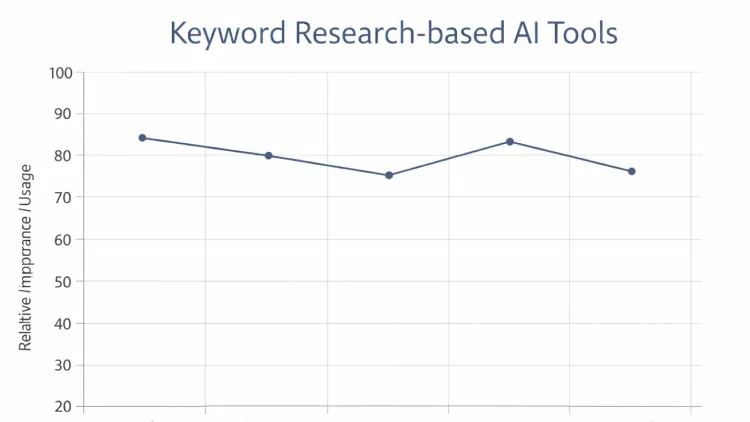
Keyword Research-based AI Tools
Some of the AI-driven SEO tools can be useful in streamlining your exercise with keyword research:
1. Semrush
Semrush offers detailed keyword research, competition and tracking trends. To use in exercises, it may assist in determining the most popular and least popular types of workouts and the least used long-tail keywords.
2. Ahrefs
Ahrefs provides advanced metrics of keywords, analysis of backlinks and clustering of the topics. It assists the workout bloggers to discover trending searches, such as standing abs workout or lower back stretching routine.
3. Surfer SEO
Surfer SEO optimises the articles according to the use of keywords and the arrangement of the content. It can assist the fitness writers in matching the search intent and keyword density suggestions with the workout guides.
4. Google Keyword Planner
Keyword Planner is a tool offered by Google to offer search volumes and suggest related keywords. It is a good method of ensuring that AI-generated keywords are valid when it comes to your exercise material.
Best Practices on Content Rank high
Following AI keyword research, after performing this research, follow the following tips to make sure that your exercise articles rank high and are read by the readers:
Write an Exercise Detailed Guide
Many exercises can have each step described step-by-stetheirits advantages, and typical errors. Indicatively, instructions on a Reverse Lunge must comprise a posture, the muscle involved and alternative exercises.
Use Clear Headings
Divide your article into headings:
- Benefits of the exercise
- Muscles worked
- Step-by-step instructions
- Common mistakes
Clear headings are easy to read, and search engines get to realise what you are talking about.
Add Visual Elements
Visuals of exercises, videos, and infographics are used to help the reader comprehend exercises. As an example, diagrams of the muscles hit on by a Seated Row Machine exercise can be used to improve activity.
Focus on Practical Advice
Readers seek practical information to be implemented at the moment.
- To ensure that your exercise is useful, you should have instructions concerning:
- Regularity of exercise sessions: Recommend a realistic frequency of the exercises per week, depending on fitness level.
- Repeated numbers and repetitions: To achieve effective workouts, there should be clear numbers or a duration for each movement.
- Warm-up and cool-down exercises: Emphasise the easy conditions of warming up and warming down as an injury prevention activity and as an activity to enhance performance.
- It has to be used properly: Demystify the right way to stand and give either a beginner or an advanced version to make the exercise accessible to all.
Your content transforms into an authority, and the readers will have the potential to reach their fitness targets safely and effectively through practical tips.
At TechishWeb, we don’t just provide tips—we help you craft SEO-optimised, engaging, and actionable exercise articles that rank higher and attract readers. Let us handle your content strategy so you can focus on growing your fitness brand. Get in touch with us today!
Major Errors in Exercise Keyword Research
Errors in keyword research may affect your performance even when using AI.
Avoid these pitfalls:
Only Targeting High-Volume Keywords
The keywords with high volumes are very competitive. Rather, emphasise long-tail or low-competitive keywords which remain significant in terms of search volume.
Long-Tail Keywords ignored
LTC keywords such as beginner seated spinal twist guide attract very targeted traffic. They tend to be more to rank and capturing users with a definite intent.
Keyword Stuffing
Reliance on AI keyword search overkills readability and search engine optimisation in an article. Naturally organise the use of keywords in sentences, headings and captions.
AI Keyword Research: Future of AI Fitness
The development andoptimand optimisationess content are changing because of AI.
Within the near future, AI key research will enable fitness creators to:
- Trenders: Predict the workouts that would be trending so you can come up with content in time.
- Get suggested topics: Find new workout plans, pain-relieving, and body-loosening euphoria.
- Track the patterns of monitor search in real time: Monitor the changes in audience interests and modify the material fast.
- Get expert advice: Feeds on beginners, advanced athletes, or particular fitness objectives.
In the case of the fitness websites such as stretchlee.com, such items as AI keyword research make sure that the content is relevant, visible and relevant to what the readers are searching. This assists writers to write wiser, write entertaining articles, and find the appropriate audience.

Conclusion
To develop effective exercise content, an AI keyword search is non-negligent. It offers information about trending exercises, workouts that are simple to follow and exercises that work the specific part of the body, or which act as a problem-solving tension.
The use of the AI key will make it possible to:
- Get more exposure in the search engines.
- Select targeted user intentions.
- Make articles reader and search engine friendly.
Despite writing about abs exercises at home, lower body exercises, or mobility and flexibility training, the AI keyword search helps you to make sure that your material to write about will reach the right people, besides offering real value.
With the addition of AI insights to high-quality and practical exercise guidance, the fitness websites will be able to engage more readers, increase their involvement, and become a credible authority in the digital fitness environment.
Frequently Asked Questions
FAQ 1: What is AI keyword research?
Answer: AI keyword research is a service solution that involves artificial intelligence to examine the search trends and optimal keywords that will be used in your content. In the case of exercise articles, it assists in discovering trending exercises, a routine one can do without a coach, and muscle-specific exercises.
FAQ 2: What is the use of AI keyword research to work on content?
Question: It aids creators in finding popular workouts, optimizing contents to place in search engines, focusing on certain exercises, and organising the articles according to the queries customers are making.
FAQ 3: What are the AI tools applicable in exercise keyword research?
Answer: Keyword tools, such as Semrush, Ahrefs, Surfer SEO, and Google Keyword Planner, can offer suggestions on keywords, trend data and search information to make content planning easier.
FAQ 4: What are some of the pitfalls of AI keyword research?
Answer: Do not use high-volume keywords, do not use long-tail phrases, and do not stuff keywords. Reveal relevance, readability and intent by the user to develop practical exercise content.